The best Independence Day outdoor light designs for permanent lighting systems: red, white, and blue colour patterns including our signature 1-1-1 flag
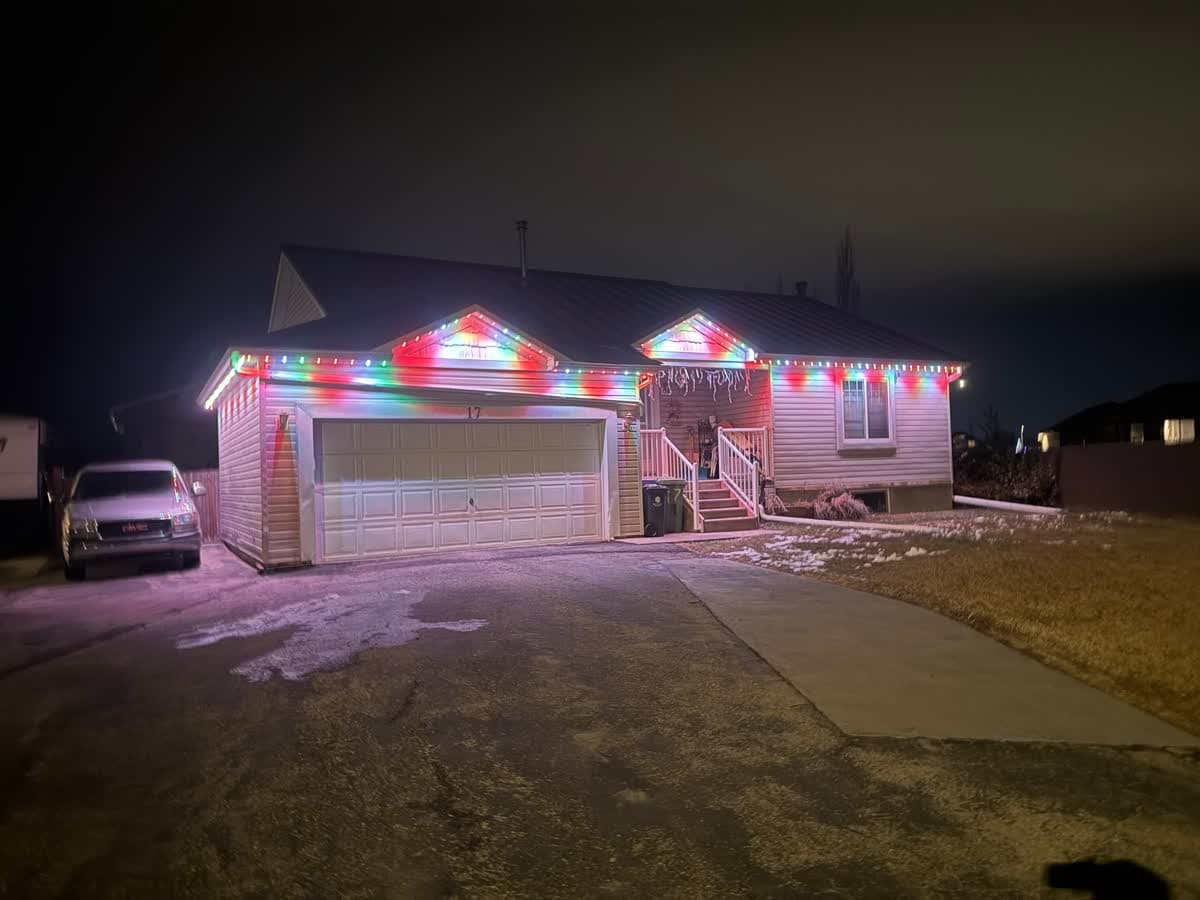 From our gallery
Independence Day is one of the best holidays for permanent outdoor lights. The colour palette is simple, bold, and unmistakable: red, white, and blue. No complex colour mixing, no subtle pastels, just clean patriotic curb appeal that looks incredible from the street and takes about two minutes to set up in the app.
This guide covers the best Independence Day light designs for permanent lighting systems, including our signature 2 Red, 2 Blue, 2 White pattern, app setup tips, and design ideas for every home style in Lake Charles and surrounding southwest Louisiana neighbourhoods.
For a quick look at how app-controlled patterns work, explore our Designs page and the live GOULY app preview. In Southwest Louisiana? See our 4th of July lights in Lake Charles page. You can also go deeper on permanent 4th of July lights, a July 4th light show, lights as a fireworks alternative, and what 4th of July lights cost.
Why Independence Day is made for permanent lights
Christmas gets most of the attention, but the Fourth of July might be the easiest holiday to light for. Here is why:
- Three colours that everyone knows. Red, white, and blue. That is it. No debate about which shade of pastel, no complicated gradients, no second-guessing. Pick red, pick white, pick blue, and you are done.
- Peak curb appeal season. July 4th lands in the middle of summer when people are outside, walking the neighbourhood, hosting cookouts, and actually seeing your home. Your patriotic outdoor lighting gets maximum visibility.
- Long daylight, late sunsets. Lake Charles gets sunset around 8:15 PM on Independence Day. Schedule your lights to turn on at dusk and your red, white, and blue display greets guests arriving for evening fireworks or backyard parties.
- No ladder required. Your permanent lights are already up. While neighbours are stapling bunting to porch railings, your entire roofline is glowing red, white, and blue with one tap.
Top Independence Day light colour patterns
These are the most popular Fourth of July outdoor lights patterns homeowners run on permanent lighting systems:
1. The 2 Red, 2 Blue, 2 White (our top pick)
The signature Independence Day pattern. One red node followed by one white node followed by one blue node, repeating across the entire eave line. It creates a bold, rhythmic look that reads as unmistakably American from the street.
- Pattern: Red, Red, Blue, Blue, White, White (repeating)
- Mode: Static
- Best for: Every home style. This is the all-rounder for July 4th permanent lights.
- App setup: Set a repeating 6-node pattern: Red, Red, Blue, Blue, White, White — reds and blues at 100 percent, whites at 90 percent
This is the pattern we recommend to most homeowners. It gives equal weight to all three flag colours, the doubled-up nodes read as bolder blocks of colour from the street, and it works cleanly whether you have a 60-foot bungalow run or a 300-foot estate roofline.
Download Our Fourth of July Colour Pattern
2 Red, 2 Blue, 2 White repeating pattern. Scan the QR code below to load it directly into your GOULY app.

How to download
- 1Open the GOULY app
- 2Tap Pattern
- 3Tap theicon (Scan)
- 4Scan this QR code
- 5Click Shared Folder, and Turn On
2. Alternating red and blue with white accents
A bolder look that leans into the deep contrast between red and blue, with white sprinkled in as a softer accent every few nodes.
- Pattern: Red, Blue, Red, Blue, White (repeating)
- Mode: Static or slow chase
- Best for: Homes with shorter eave runs where you want the colours to feel saturated and intentional
- App setup: Five-node repeating pattern, all colours at full brightness, white slightly dimmed to 85 percent
3. Red, white, and blue chase
The same red, white, and blue alternating pattern, but with a slow chase animation so the colours appear to flow along the roofline like a parade.
- Pattern: Red, White, Blue (alternating, animated)
- Mode: Chase at 2 to 3 second speed
- Best for: Longer rooflines on two-storey and estate homes where the motion effect is visible from the street
- App setup: Alternating red, white, and blue with chase animation enabled
4. Stars-and-stripes-style fade
A dominant red and white stripe section across one half of the roofline and a deep blue field across the other, mimicking the visual structure of the American flag.
- Pattern: Red, White, Red, White (left half) and solid Blue (right half)
- Mode: Static
- Best for: Homes with a clear architectural break, like a centre gable or a wing, where the two zones read as separate
- App setup: Address the left zone as alternating red and white, the right zone as solid blue at 100 percent
5. Patriotic gradient
A gradient that transitions from red on one end of the roofline through white in the middle to blue on the other end. Looks dramatic on long, uninterrupted eave lines.
- Pattern: Red fading through white to deep blue
- Mode: Static gradient
- Best for: Ranch homes, bungalows, and any home with 150+ feet of continuous eave
- App setup: Use the gradient tool with red as the start, white as the midpoint, and blue as the end colour
Independence Day designs by home style
| Home style | Recommended pattern | Why it works |
|---|---|---|
| Modern two-storey | 2 Red, 2 Blue, 2 White | Bold and clean, suits sharp architectural lines |
| Bungalow or ranch | Patriotic gradient | Long roofline shows the full red-white-blue transition |
| Craftsman or character | Alternating red and blue with white accents | Classic feel complements traditional architecture |
| Estate or luxury | Stars-and-stripes-style fade | Architectural patriotic elegance on large homes |
| Cabin or lake home | Red, white, and blue chase | Animated pattern adds warmth and movement to natural materials |
How to set up Independence Day scenes in the GOULY app
Setting up a red white and blue house lights scene takes about 2 minutes. Here is the flow:
- Open the GOULY app and navigate to your home profile
- Find the folder you want to edit or create a new one (e.g. "Independence Day" or "Summer Holidays")
- Choose your scene from the folder or create a new scene
- Set your pattern to the 2 Red, 2 Blue, 2 White repeating pattern
- Set the animation mode (static for clean, chase for movement)
- Set a schedule so lights turn on at sunset and off at your preferred time
Controller / App
Switch patterns in the comfort of your home
Every scene, colour, and schedule runs from your phone, no clips, no climbing.
Most-used scenes
Try the live preview
See colours and patterns before you commit.
Pro tips for Independence Day lighting
- Use full brightness. Unlike Easter pastels, Independence Day colours look best at 90 to 100 percent brightness. Red, white, and blue are bold by nature, so lean into it.
- Keep white at 90 percent. Dropping white brightness slightly to 90 percent gives it a warmer tone that blends better with the red and blue instead of looking sterile.
- Start early. Set your Independence Day scene a few days before July 4th. Neighbours will notice and it builds anticipation for the holiday.
- Schedule for dusk. Lake Charles sunsets are around 8:15 PM in early July. Schedule your lights to turn on at sunset so they are glowing when the fireworks start.
- Save it as a folder. Save your Independence Day scene in a dedicated folder so you can pull it up again next year in seconds.
Independence Day vs Memorial Day: same colours, different feel
If you have run red, white, and blue for Memorial Day, you already know how the palette looks on your home. But Independence Day hits differently in July:
| Factor | Memorial Day red, white, and blue | Independence Day red, white, and blue |
|---|---|---|
| Mood | Solemn, respectful, reflective | Celebratory, bold, festive |
| Backdrop | Late spring greenery, sunset around 8 PM | Full summer, sunset around 8:15 PM |
| Brightness feel | Slightly dimmed, dignified | Full saturation, patriotic |
| Neighbour visibility | Moderate (long weekend travel) | High (everyone home for cookouts and fireworks) |
| Best animation | Static, occasional slow fade | Static or medium chase |
| Display duration | 3 to 5 days around the last Monday in May | 5 to 10 days around July 4th |
The takeaway: the same red, white, and blue palette can carry two completely different holidays. Save one scene for solemn, save another for celebratory, and you are covered for both.
Combining Independence Day lights with outdoor entertaining
The Fourth of July falls in peak cookout and outdoor entertaining season in Lake Charles. Your permanent patriotic outdoor lighting creates the backdrop for the entire evening:
- Backyard BBQ lighting. Set your eave line to 2 Red, 2 Blue, 2 White while your patio lights (if integrated with residential track lighting) run warm white for comfortable dining.
- Fireworks viewing. Schedule your lights to dim or turn off at 9:00 PM if you are watching local fireworks over Lake Charles or the I-10 lakefront, then bring them back on after the show.
- Pool or deck parties. The red, white, and blue glow reflected off water or a deck surface looks incredible at night. Static mode keeps it sophisticated while the kids are swimming and the adults are grilling.
- Block parties. Your house becomes the landmark. "The one with the red, white, and blue lights" is an easy way for guests to find you on a street full of homes that all look similar at night.
What colour lights for every American holiday
One of the biggest advantages of a permanent lighting system is that you are never limited to one holiday. Here is a quick reference for the major American holidays and the colour patterns that work best:
| Holiday | Colours | Pattern style |
|---|---|---|
| New Year's Eve | Gold, silver, white | Sparkle or chase |
| Valentine's Day | Red, pink, warm white | Alternating or gradient |
| Memorial Day | Red, white, blue (dignified) | Static, slow fade |
| Independence Day | Red, white, and blue (2-2-2 pattern) | Static or slow chase |
| Labor Day | Red, white, and blue | Same as Independence Day |
| Halloween | Orange, purple, green | Chase or flicker |
| Veterans Day | Red, white, blue (poppy red) | Static, solemn |
| Christmas | Red, green, warm white | Chase, twinkle, static |
Memorial Day, Independence Day, Labor Day, and Veterans Day all use the same red, white, and blue palette, so a single saved scene can serve four holidays a year with minor tweaks to brightness and animation.
How long should you run Independence Day lights?
Most homeowners start their Independence Day light designs scene 5 to 7 days before July 4th and keep it running through the holiday week. Some transition directly into a summer palette after, and some keep it running through Labor Day weekend as well.
A suggested seasonal timeline around Independence Day:
| Period | Suggested scene |
|---|---|
| Mid-June | Warm white or summer colours |
| Late June | Begin red, white, and blue test runs |
| June 30 to July 7 | Full Independence Day red, white, and blue |
| July 8 onward | Summer warm white, teal, or team colours |
The beauty of permanent lights is that switching takes seconds. There is no reason not to run red, white, and blue for a full week even if you prefer a different everyday look.
Cost of Independence Day lighting with permanent lights
If you already have a permanent lighting system installed, running Independence Day scenes costs nothing extra. There is no new hardware, no flag bunting to buy, no seasonal install fee. You use the same system you use for Christmas, everyday curb appeal, and every other occasion.
If you do not have permanent lights yet, a Fourth of July-ready system is the same as any other permanent lighting install:
| Home type | Typical installed range | Independence Day ready? |
|---|---|---|
| Bungalow (~150 ft) | $2,500 to $3,000 USD | Yes, RGBW with full app control |
| Two-storey (150 to 200 ft) | $3,000 to $4,000 USD | Yes, RGBW with full app control |
| Estate (250 to 400 ft) | $4,000 to $5,000 USD (larger estates quoted individually) | Yes, RGBW with full app control |
Every system we install in Lake Charles uses RGBW LED puck lighting with individually addressable control, which means Independence Day reds and blues, Christmas greens, Halloween oranges, and everyday warm white are all included from day one.
Independence Day light ideas you can steal
Here are specific, ready-to-use July 4th permanent lights setups homeowners love:
The Stars and Stripes 2 Red, 2 Blue, 2 White repeating pattern across the full eave line at 100 percent brightness. Static mode. Clean, bold, and unmistakable. This is the one you want if you want your house to look like it is wearing the American flag.
The Old Glory Solid blue across the centre gable or peak of the home, with alternating red and white striping running out across both eave lines. Mimics the actual structure of the flag and works best on homes with a strong architectural centre.
The Fireworks Finale Red, white, and blue chase pattern at faster speed (1 to 1.5 second cycles). Looks like fireworks shimmering across the roofline. Perfect for the actual night of July 4th once the sun goes down and the neighbourhood show begins.
The Block Party Red, white, and blue chase pattern at medium speed. More animated and festive than static, perfect for homes hosting Fourth of July gatherings where you want the lights to feel like part of the celebration.
The Subtle Patriot Warm white base with every fourth node set to a soft red and every eighth node set to deep blue. For homeowners who want a nod to Independence Day without going full bold. Works well on modern homes with neutral stucco or dark siding.
Beyond Independence Day: summer transitions
Once the Fourth of July week wraps, keep the momentum going. Here are natural transitions from Independence Day into the rest of summer:
- Independence Day red, white, and blue to warm white (clean summer curb appeal)
- Independence Day red, white, and blue to teal and warm white (Gulf Coast summer evening look)
- Independence Day red, white, and blue to team colours (LSU purple and gold, Saints black and gold, or any team)
- Independence Day red, white, and blue back to red, white, and blue for Labor Day in early September
- Independence Day red, white, and blue to orange and purple (early Halloween prep in late September)
Your Independence Day folder sits in the app library right alongside Christmas, Easter, Halloween, Memorial Day, Veterans Day, and everyday. One tap to switch, no ladder, no clips, no storage boxes. If you have neighbours visiting from north of the border, you can even run a Canada Day scene the week before.
Questions to ask before setting up your Independence Day scene
If you are new to permanent lighting or just installed your system, here are common questions homeowners ask before setting up Independence Day scenes:
- What red should I use for Independence Day? Use a pure, saturated red at full brightness. Avoid dark or maroon tones. The GOULY app colour wheel lets you dial in the exact shade that matches the American flag.
- What blue should I use? A deep navy blue reads best on a roofline. Avoid bright royal or sky blue, which can look more like a sports team than the flag. Drop the blue saturation slightly if it looks too electric at night.
- Should I use cool white or warm white? Cool white gives a cleaner, crisper flag look. Warm white is softer and blends better at night. Most homeowners prefer cool white for Independence Day specifically.
- Will the 2 Red, 2 Blue, 2 White pattern work on my home? Yes. It works on every home size and style in Lake Charles. On shorter runs it still reads clearly because the pattern repeats frequently.
- Can I schedule Independence Day lights to turn on automatically? Yes. Set a schedule in the app for automatic on and off based on sunset or a specific time.
Ready to light up your home for Independence Day and every occasion?
Frequently asked questions
Red, white, and blue. The most popular pattern is 1 Red, 1 White, 1 Blue repeating across the roofline. Use a pure saturated red, full-brightness white, and a deep royal blue for the cleanest American flag look.
Yes. Any RGBW permanent lighting system with app control can produce red, white, and blue Independence Day patterns, chases, and static scenes. Switch designs in the app — no new hardware required.
Create a new scene, set a repeating 3-node pattern of Red, White, Blue, and save it to an Independence Day folder. Brightness at 100 percent for red and blue, 90 percent for white gives the cleanest contrast.
Most homeowners start their Independence Day lighting scene 3 to 5 days before July 4th and keep it running through the long weekend, then transition into a summer palette.
No. If you already have a permanent lighting system with RGBW nodes, Independence Day scenes are free. You use the same hardware and just create a new scene in the app.
Questions before you book?
Visit our FAQ page
Get quick answers on Gen 3 Lighting, pricing, install timelines, app setup, warranty, and what to expect on install day.