Warm white or cool white for outdoor LEDs? Compare 2700K, 3000K and 4000K colour temperatures — warm for curb appeal, cool for security — plus RGBW tips.
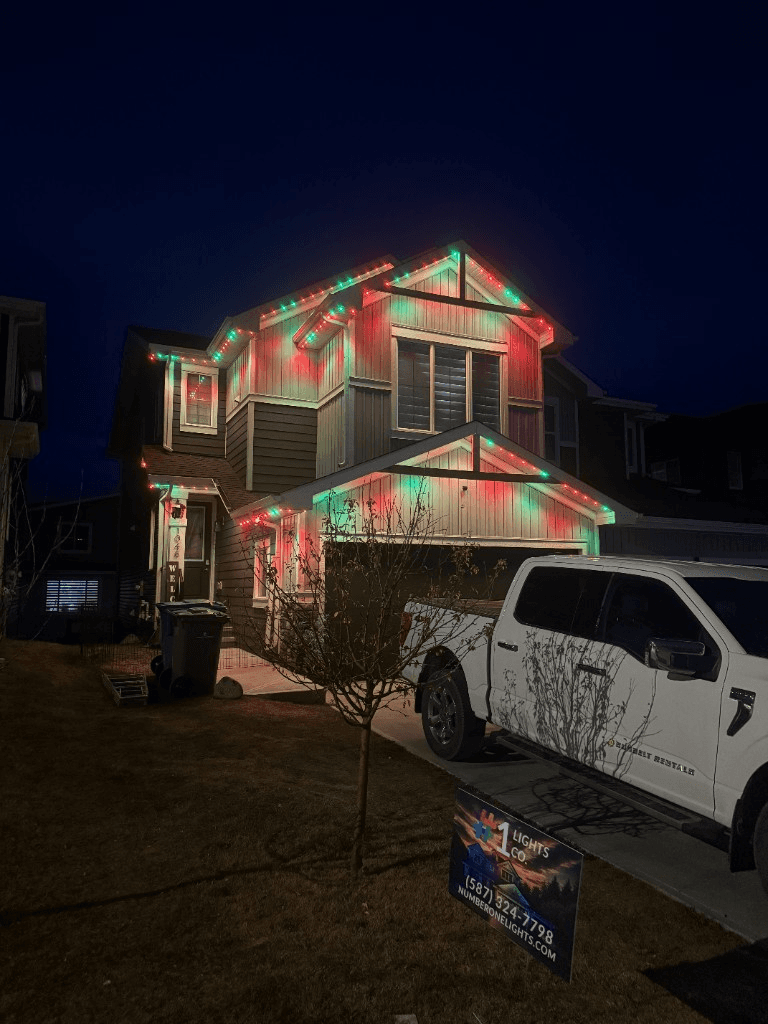 From our gallery
Choosing between warm white and cool white LEDs is one of the most common questions homeowners ask before installing permanent outdoor lighting. The difference sounds small, but it completely changes how your home looks at night.
This guide explains what LED colour temperature actually means, how to read the Kelvin scale, which temperature works best for different areas of your home, and why RGBW permanent lighting means you never have to choose just one.
What is LED colour temperature?
Colour temperature describes the tone of white light a bulb produces. It is measured in Kelvin (K), and it works on a scale from warm amber tones at the low end to blue-white daylight tones at the high end.
The name is counterintuitive. A lower Kelvin number means warmer, more yellow light. A higher number means cooler, more blue-white light.
2700K
Warm white (soft, amber tone)
4000K
Cool white (crisp, blue-white tone)
5000K+
Daylight (bright, clinical tone)
When you see a bulb or LED module labelled 2700K, 3000K, 4000K, or 5000K, that number tells you exactly where it sits on this scale.
Warm white LED explained (2700K to 3000K)
Warm white light sits between 2700K and 3000K on the Kelvin scale. It produces a soft, golden glow similar to a traditional incandescent bulb or candlelight.
This is the most popular colour temperature for residential outdoor lighting, and for good reason:
- flattering to skin tones, making outdoor gathering spaces feel welcoming
- creates a cozy, relaxed atmosphere on patios, decks, and entryways
- complements warm-toned building materials like brick, cedar, stone, and stucco
- less disruptive to neighbours, wildlife, and your own sleep cycle
- the go-to choice for everyday curb appeal lighting
Most homeowners who want their permanent lights set to a single look for daily use choose warm white around 2700K to 3000K. It looks like the house belongs in a magazine, every night.
2700K vs 3000K: what is the difference?
The difference is subtle but noticeable side by side:
- 2700K has a slightly amber, candlelight warmth. Classic and traditional.
- 3000K is a touch crisper and cleaner. Still warm, but with slightly more clarity.
Both work well for residential outdoor lighting. If your home has warm-toned materials like natural wood or red brick, 2700K tends to look better. If your home has cooler materials like grey siding or white stucco, 3000K can feel more balanced.
Cool white LED explained (4000K to 5000K)
Cool white light sits between 4000K and 5000K. It produces a brighter, crisper, blue-white glow that looks closer to natural daylight.
Cool white is less common for residential curb appeal, but it has strong use cases:
- security lighting where maximum visibility matters
- modern and contemporary architecture where a clean, sharp look is desired
- highlighting greenery and landscaping at night (the blue tones make foliage pop)
- commercial and retail properties where brightness conveys professionalism
- task-oriented areas like garages, workshops, and loading zones
At 5000K and above, light enters true daylight territory. This is rarely used for residential exteriors because it can look harsh and clinical. It works well for floodlights and utility areas, but not for a welcoming home aesthetic.
Warm white vs cool white: side by side comparison
| Feature | Many Competitors | GOULY Gen 3 |
|---|---|---|
| Factor | Warm White (2700K-3000K) | ✓Cool White (4000K-5000K) |
| Tone | Soft amber or golden glow | ✓Crisp blue-white glow |
| Best for | Curb appeal, entertaining, ambiance | ✓Security, visibility, modern architecture |
| Feel | Cozy, welcoming, relaxed | ✓Bright, alert, energizing |
| Building materials | Brick, cedar, stone, warm-toned siding | ✓Grey, white, metal, glass, modern finishes |
| Neighbour friendliness | Less glare, softer on the eyes | ✓Brighter, can cause more light spill |
| Wildlife impact | Less disruptive (lower blue light) | ✓More disruptive to nocturnal wildlife |
| Most popular for homes | Yes | ✓No (used selectively) |
What about neutral white (3500K)?
Neutral white at 3500K sits right between warm and cool. It is sometimes called commercial white because it is common in retail and office settings.
For outdoor residential lighting, 3500K can work as a compromise, but most homeowners find it does not feel as inviting as 2700K to 3000K and does not deliver the crisp punch of 4000K. It tends to land in an in-between zone that does not fully commit to either look.
That said, it can be a solid choice for pathway lighting and areas where you want moderate visibility without the harshness of cool white.
Why RGBW changes everything
Here is where permanent LED lighting has a massive advantage over traditional outdoor lights.
Traditional fixtures lock you into a single colour temperature at the time of purchase. If you buy 2700K bulbs, you get 2700K forever. Changing means buying new bulbs.
RGBW permanent lighting systems like the GOULY Gen 3 include four LED channels: Red, Green, Blue, and a dedicated White channel. This means:
- the dedicated W (white) channel produces a clean, true warm white without mixing RGB
- by blending the RGB and white channels, you can dial in any colour temperature from warm amber to cool daylight
- you switch between warm white, cool white, and full colour mode from the GOULY app in seconds
- different zones of your home can run different temperatures at the same time
- you are never locked into a single choice
Want warm white for everyday curb appeal? Done. Switch to cool white for security lighting at 2 AM? One tap. Go full colour for holidays and celebrations? Unlimited options.
This is why the warm white vs cool white debate matters less with RGBW. You get both, plus every colour in between, on one system.
4
LED channels (Red, Green, Blue, White)
16M+
Possible colour combinations
1,000+
Pre-built designs in the GOULY app
Best colour temperature by location on your home
Different areas of your home benefit from different temperatures. Here is a practical guide:
Roofline and soffit lighting
2700K to 3000K warm white for everyday use. This is what visitors and neighbours see first, and warm tones create the best curb appeal. Switch to colour for holidays or events.
Front entryway
2700K warm white. You want guests to feel welcomed, not interrogated. Soft and inviting wins here.
Backyard and patio
2700K to 3000K warm white for entertaining and relaxing. This flatters skin tones and creates the kind of atmosphere people want to spend time in.
Driveway and garage
3000K to 4000K for better visibility. A slightly cooler tone helps you see clearly when arriving home at night without feeling harsh.
Security and perimeter
4000K to 5000K cool white for maximum visibility. Bright, alert light deters intruders and ensures camera footage is clear. With GOULY, you can schedule security mode to activate automatically at specific hours.
Garden and landscaping
3000K to 4000K to make greenery pop. The slight blue shift in cooler tones accentuates leaves and natural colours.
Common mistakes homeowners make
Mixing colour temperatures from different fixtures. When you have 2700K on one roofline and 4000K on another, the mismatch is obvious and looks inconsistent. Permanent RGBW lighting solves this because every puck on your home runs from the same system.
Going too cool for curb appeal. A 5000K home exterior looks like a car dealership, not a cozy house. Save cool white for security zones and utility areas.
Ignoring the white channel. Some cheaper RGB-only systems try to create white by mixing red, green, and blue together. The result is a muddy, pinkish white that never looks right. True RGBW systems with a dedicated white LED produce clean, accurate whites. The GOULY Gen 3 pucks include this dedicated white channel.
Forgetting about neighbours. Cool white light at high brightness creates more glare and light spill. If your home is close to neighbours, warm white is more considerate and less likely to cause complaints.
How to choose the right colour temperature
If you are choosing a fixed-temperature light, go with 2700K to 3000K warm white for residential outdoor use. It is the industry standard for a reason.
If you are installing a permanent RGBW system, you do not need to choose. Set warm white as your default, and adjust by zone, occasion, or time of day through the app. Check the quick start guide to see how easy it is.
Not sure what will look best on your home? Our team can show you options during a free virtual quote. We have installed on hundreds of homes across Calgary, Chestermere, and the surrounding communities and can recommend the right starting look for your materials and style.
The bottom line
Warm white (2700K to 3000K) is the best all-around choice for residential outdoor lighting. It is welcoming, flattering, and works with almost every home style.
Cool white (4000K to 5000K) has its place for security, visibility, and modern architecture, but it should be used selectively, not as a default.
With RGBW permanent lighting, you never have to pick one. The dedicated white channel gives you true, clean warm white for everyday use, and you can switch to cool white, full colour, or anything in between from your phone. One system, every temperature, zero compromise.
Frequently asked questions
Warm white between 2700K and 3000K is the best all-around colour temperature for residential outdoor lighting. It creates a welcoming, flattering glow that works with most home styles and building materials.
Warm white LEDs (2700K to 3000K) produce a soft golden glow similar to incandescent bulbs. Cool white LEDs (4000K to 5000K) produce a brighter, crisper blue-white light closer to daylight. The difference is measured in Kelvin (K).
Cool white (4000K to 5000K) is better for security lighting because it appears brighter to the eye and provides better visibility for cameras. Many homeowners use warm white for curb appeal and switch to cool white for overnight security mode.
The W in RGBW stands for White. It is a dedicated white LED channel separate from the Red, Green, and Blue channels. This produces a clean, true white light instead of the muddy pinkish white that RGB-only systems create by mixing colours.
Yes. RGBW permanent lighting systems like GOULY Gen 3 can produce any colour temperature from warm amber to cool daylight by blending the RGB and dedicated white channels. You switch between them instantly in the GOULY app.
Both work well. 2700K has a slightly warmer, amber candlelight quality that suits traditional homes with brick, cedar, or stone. 3000K is a touch crisper and cleaner, which can look more balanced on modern homes with grey siding or white stucco.
Questions before you book?
Visit our FAQ page
Get quick answers on Gen 3 Lighting, pricing, install timelines, app setup, warranty, and what to expect on install day.