Yes. GOULY track installs on all common fascia materials including wood, aluminum, vinyl, James Hardie fibre cement, and composite.
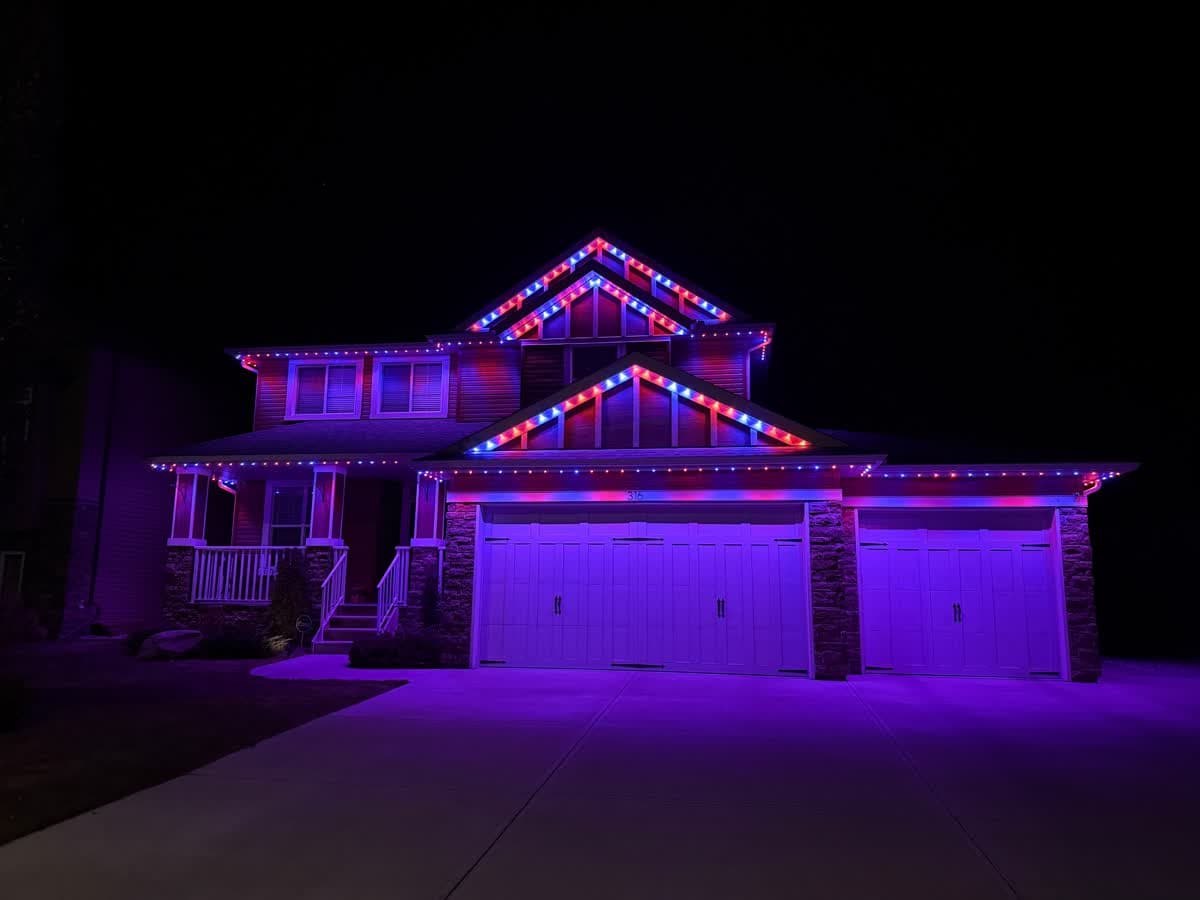 From our gallery
One of the most common questions homeowners ask before booking an install is whether their fascia material will work with permanent lighting. The short answer: yes. The GOULY Gen 3 system is designed to mount on virtually every fascia type found on Alberta homes, from 1960s wood fascia to brand-new composite board.
The longer answer involves understanding how the mounting approach changes for each material, why professional installation matters more on some surfaces than others, and what to watch for if your home has mixed materials or aging trim.
Supported fascia materials
The GOULY permanent lighting system mounts to these fascia types:
Wood fascia
Wood is the most common fascia material on older Alberta homes, particularly those built before the 2000s. Cedar, spruce, and pine fascia boards are all suitable for permanent lighting.
Mounting approach: The aluminum hat track fastens directly into wood with corrosion-resistant screws. Wood provides a solid anchor point, and the track sits flush against the board for a clean finished look.
Considerations: Older wood fascia should be inspected for rot, splitting, or paint failure before installation. Our crew checks every board during the install. If a section is soft or compromised, we will flag it. Permanent lighting should not be mounted on rotting wood since the fasteners will not hold, and moisture behind the track can accelerate decay. The fix is usually a targeted board replacement before the track goes on.
Aluminum fascia
Aluminum cladding is extremely common in Alberta, especially on homes built in the 1980s through early 2000s. It is often found as a wrap over the original wood fascia.
Mounting approach: Screws pass through the aluminum cladding and anchor into the wood substrate behind it. The track mounts cleanly, and the aluminum surface provides a smooth, consistent plane for the hat track.
Considerations: The key is confirming there is solid wood behind the aluminum. In some cases, the cladding was installed over deteriorated wood. A quick check during the assessment confirms whether the substrate is sound. Our installers also ensure the screw holes are properly sealed to prevent moisture entry behind the cladding.
Vinyl fascia
Vinyl fascia and soffit panels are found on newer builds and renovated homes. Vinyl is lightweight, maintenance-free, and generally works well with permanent lighting.
Mounting approach: Similar to aluminum, screws pass through the vinyl and anchor into the wood or structural substrate behind it. The track compresses gently against the vinyl surface without cracking or warping it.
Considerations: Vinyl can become brittle in extreme cold. Professional installation ensures fasteners are placed correctly and not overtightened, which could crack the material. The hat track distributes load evenly, so stress on individual mounting points is minimal.
James Hardie (fibre cement)
James Hardie board is a premium fibre cement product used on higher-end new construction and renovations. It is dense, weather-resistant, and holds fasteners exceptionally well.
Mounting approach: Fasteners designed for fibre cement are used to anchor the track directly into the board. James Hardie provides one of the most stable mounting surfaces for permanent lighting because the material does not expand, contract, or warp the way wood can.
Considerations: Pre-drilling is often necessary to prevent cracking at the edges of the board. A professional crew knows the correct fastener type and spacing for fibre cement.
Composite fascia
Composite materials, including various engineered wood and plastic blends, are appearing on newer Alberta homes. These include products from manufacturers like Versatex and AZEK.
Mounting approach: Composite materials generally accept screws well, and the track mounts similarly to wood fascia. The density and stability of composite boards makes for a clean, long-lasting install.
Considerations: Some composite products are hollow or have a foam core. The installer needs to confirm the material thickness and select fasteners that engage properly. This is why a professional install matters: the crew adapts the technique to the actual material on site.
| Feature | Many Competitors | GOULY Gen 3 |
|---|---|---|
| Fascia material | Mounting method | ✓Key consideration |
| Wood (cedar, spruce, pine) | Direct screw into board | ✓Check for rot or splitting first |
| Aluminum cladding | Through-cladding into wood substrate | ✓Confirm solid wood behind |
| Vinyl | Through-vinyl into substrate | ✓Do not overtighten fasteners |
| James Hardie (fibre cement) | Pre-drilled with fibre cement fasteners | ✓Prevents edge cracking |
| Composite (engineered) | Direct screw into board | ✓Confirm core density |
Why mounting approach matters
The aluminum hat track is the backbone of the system. It holds the RGBW LED puck modules, hides the wiring, and creates the clean architectural line that makes permanent lighting look intentional rather than tacked on.
But a track is only as good as its mounting. If the fasteners are wrong for the material, the track can:
- pull away from the fascia over time
- vibrate in high winds, creating noise
- allow moisture behind the mounting surface
- create visible gaps between the track and the fascia
Professional installers carry multiple fastener types and adjust their technique on every section of the roofline. A home with aluminum fascia on the front and wood on the sides gets two different approaches, both designed for the specific material.
Older homes vs newer homes
Older homes (pre-2000)
Older Alberta homes typically have wood fascia, sometimes with aluminum cladding installed as an upgrade. These homes are excellent candidates for permanent lighting, but they require more attention during installation.
Common situations on older homes:
- Paint buildup. Multiple layers of paint can create an uneven surface. The track compresses against the surface, but significant buildup may need to be addressed at contact points.
- Warped or bowed boards. Wood fascia that has warped over decades may not provide a perfectly straight mounting plane. The hat track can accommodate minor variations, but severe bowing should be corrected first.
- Mixed materials. It is common to find wood on the main house, aluminum on an addition, and vinyl on a later garage build. Our crew handles transitions between materials seamlessly.
- Previous mounting holes. Holes from old Christmas light clips, gutter hardware, or satellite dish brackets should be sealed before the track goes on.
Newer homes (post-2010)
Newer construction in Alberta typically features one of: James Hardie, vinyl, composite, or aluminum fascia. These materials are generally in better condition and provide consistent mounting surfaces.
Common situations on newer homes:
- Warranty concerns. Some homeowners worry about drilling into new fascia. The sealed mounting method used by professional installers does not void typical fascia or siding warranties. Fastener holes are sealed and hidden behind the track.
- Colour matching. Newer homes often have specific fascia colours. The hat track is available in colour-matched options to blend with common fascia tones. See the full system overview for available track colours.
- Higher rooflines. Newer homes in Alberta tend to be taller, with steeper pitches and more complex rooflines. This makes professional installation even more important for safety and quality.
5+
Fascia material types supported
-40°C
GOULY Gen 3 operating temperature
1 day
Typical install time regardless of material
What about soffit mounting?
Some homeowners want their permanent lights mounted in the soffit rather than on the fascia. The GOULY system supports this as well. Soffit mounting points the light downward, washing the exterior walls with light rather than projecting outward from the roofline.
Soffit materials in Alberta are typically aluminum, vinyl, or wood. The same material considerations apply: confirm the substrate is solid, use the correct fastener type, and seal the mounting points.
Whether fascia or soffit mounting is best for your home depends on the architecture, the lighting effect you want, and the condition of each surface. This is something our crew evaluates during the virtual quote process.
Why professional installation matters for every material
Each fascia material has its own characteristics: expansion rates, fastener compatibility, moisture behaviour, and load tolerance. A DIY install using generic screws and a one-size-fits-all approach will hold up on some materials and fail on others.
Professional installers from Number One Lights:
- assess every fascia section during the initial review
- carry the correct fastener types for wood, aluminum, vinyl, fibre cement, and composite
- seal every mounting point to prevent moisture entry
- adapt their technique at material transitions
- flag any fascia sections that need repair before the track goes on
The result is a clean, straight installation that stays secure through Alberta's freeze-thaw cycles, chinook winds, and summer storms. Browse real installs on different fascia types in our gallery.
Getting started
Not sure what fascia material your home has? That is completely normal. Most homeowners do not know until an installer takes a look. Our virtual quote process includes a fascia assessment so you know exactly what to expect before install day.
You can also explore the full GOULY system overview to see how the hat track, LED puck modules, and certified control box work together on any fascia type.
Frequently asked questions
Yes. The GOULY track system installs on all common fascia and soffit materials including wood, aluminum, vinyl, James Hardie fibre cement, and composite. The mounting method is adapted to each material.
Questions before you book?
Visit our FAQ page
Get quick answers on Gen 3 Lighting, pricing, install timelines, app setup, warranty, and what to expect on install day.