Set the scene for Valentine's Day with permanent outdoor light designs: classic red and pink, all-rose passion wash, champagne sweetheart palettes,
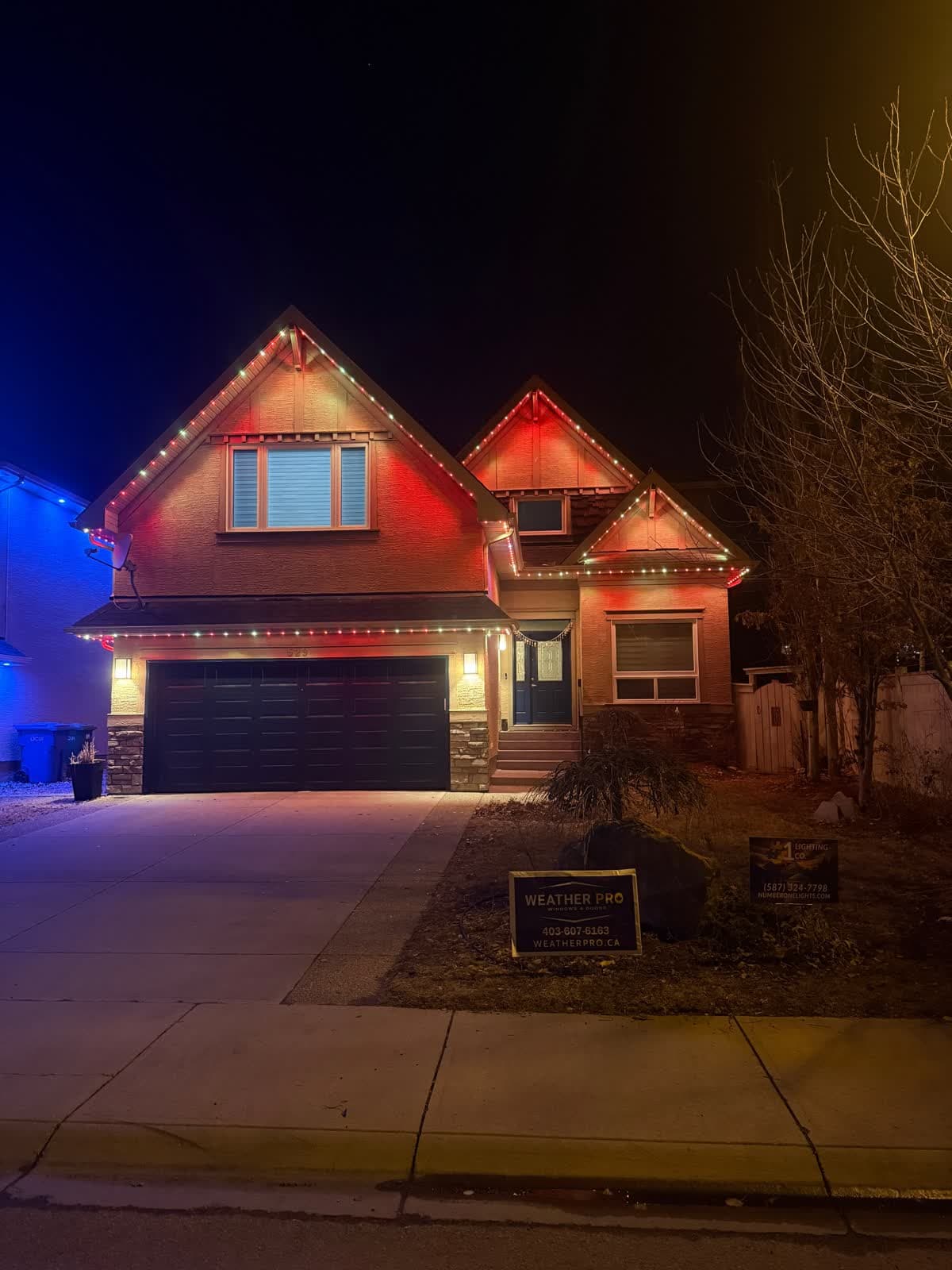 From our gallery
Valentine's Day, celebrated every February 14th, is one of the most quietly romantic nights of the year — a single evening dedicated to love, intimacy, and the small, deliberate gestures that make a partner feel seen. From candlelit dinners and handwritten cards to surprise proposals and milestone anniversaries, February 14 is a night when atmosphere matters more than almost any other holiday on the calendar.
This guide covers the most beautiful Valentine's Day light designs for permanent outdoor lighting systems — the classic reds and pinks, the soft warm whites, the surprise reveal moments for proposals, and full app-setup walkthroughs for every romantic scenario. It is written for Calgary homeowners (where February sunset lands around 5:30 PM and dusk arrives just in time for dinner reservations) and for our customers in Lake Charles, Louisiana, where the holiday lands in the heart of the Gulf Coast's mildest season.
For a quick look at how app-controlled romantic patterns work, explore our Designs page and the live GOULY app preview.
Why Valentine's Day is well-suited to permanent lights
Valentine's Day is one of the most underrated holidays for permanent outdoor lighting. Most homeowners think of Christmas first, but Valentine's Day outdoor lights may be the single most romantic use of an RGBW system across the entire year. Here is why:
- Surprise moments are everything. Valentine's Day is built on small reveals — a partner stepping outside, opening the front door, or pulling into the driveway and discovering something unexpected. Permanent lights can be triggered or scheduled to the exact second, which means proposal lights can switch from warm white to a deep romantic red and pink the moment your partner walks out to the porch. No fumbling with extension cords, no last-minute setup, no risk of a soggy printed sign.
- February darkness creates a long visible window. In Calgary, sunset on February 14 lands around 5:30 PM. By 6:00 PM the entire neighbourhood is in full darkness — exactly the dinner-reservation hour. That gives Valentine's Day permanent lights a long, intimate window to glow during the most romantic part of the night, instead of fighting summer dusk that does not arrive until 10 PM.
- A romantic palette without yard signs. You do not need plastic hearts or inflatable cupids to mark the night. A clean palette of red, pink, and warm white reads as Valentine's Day from a block away — no novelty decor, no cleanup the next morning.
- Schedule for the exact dinner-time arrival. The GOULY app lets you schedule scenes down to the minute. If your reservation is at 6:30 PM, your lights can be glowing in their romantic palette by 6:15 — perfectly timed for the moment you step out of the car together.
Top Valentine's Day light colour patterns
These are the most popular romantic outdoor lights patterns homeowners run for February 14 outdoor lights:
1. The Classic Romance (1 Red, 1 Pink, 1 White repeating)
The signature Valentine's Day permanent lights pattern. One red, one pink, one warm white, repeating across the entire eave line. Reads unmistakably as Valentine's Day from the street and pairs beautifully with any home colour, brick, or siding.
- Pattern: Red, Pink, White, Red, Pink, White (repeating)
- Mode: Static
- Best for: Every home style. This is the all-rounder for Valentines Day light designs.
- App setup: Set a repeating 3-node pattern: Red at 100 percent, Pink at 100 percent, Warm White at 70 percent
The three-node rhythm keeps the eave line visually balanced — red provides the bold romantic anchor, pink softens the palette into something genuinely tender, and warm white gives the display a candlelit glow rather than a stark holiday feel. This is the pattern we recommend to most homeowners for their first Valentine's Day scene.
2. The Roses (deep red wash with warm white accents)
A pattern inspired by a dozen long-stemmed roses on a dinner table. A deep saturated red wash across the entire roofline, with one warm white accent node per panel to mimic the gentle highlights of candlelight on rose petals.
- Pattern: Red, Red, Red, Red, White (repeating with one white every five nodes)
- Mode: Static
- Best for: Anniversaries, intimate at-home dinners, and homes with classic or traditional architecture
- App setup: Five-node repeating pattern: four Red at 100 percent, one Warm White at 60 percent
The Roses pattern is heavily red-dominant, which makes it the most overtly romantic of the six. The warm white accents prevent the wash from feeling flat — they read as candle flickers along the eave rather than a single solid colour bar.
3. The Sweetheart (alternating pink and rose with crossfade)
A softer, more feminine take on the holiday. Alternating pink and a deeper rose tone with a gentle crossfade animation that makes the whole eave line breathe slowly between the two shades.
- Pattern: Pink, Rose, Pink, Rose (alternating)
- Mode: Slow crossfade, 20-second cycle
- Best for: Date nights, surprise dinners, and homeowners who want something sweet rather than bold
- App setup: Two-colour alternating pattern: Pink at 100 percent, Rose at 100 percent, crossfade duration 20 seconds
The Sweetheart is the pattern most homeowners pick when they want romantic permanent lights that feel intimate and slow rather than punchy. The crossfade movement is barely perceptible from across the street — it just makes the home look like it is gently glowing rather than statically lit.
4. The Be Mine chase (red and pink chase animation)
A more playful, animated take. Red and pink nodes chase across the eave line in a flowing, one-directional pattern that reads as movement from any angle. Perfect for homes hosting Valentine's Day parties or for homeowners who want their heart house lights to feel celebratory rather than only intimate.
- Pattern: Red, Pink, Red, Pink (alternating) with chase animation
- Mode: Chase, medium speed
- Best for: Homes hosting Valentine's gatherings, families with kids, and homeowners who want a more festive vibe
- App setup: Two-colour alternating pattern with chase mode, speed at 50 percent, direction left to right
The Be Mine chase is the pattern that draws the most attention from passing cars and neighbourhood walkers. If you want your home to be the unmistakable Valentine's Day house on the block, this is it.
5. All-red Passion wash
A full red roofline at 100 percent brightness. Saturated, bold, and unmistakable. The simplest and most direct red and pink outdoor lights statement you can make — though in this case, all red, no pink.
- Pattern: Solid red across the entire roofline
- Mode: Static
- Best for: Homeowners who want a single-colour, statement-level display. Particularly powerful for proposal reveals.
- App setup: Set all nodes to red at 100 percent
The Passion wash is the pattern most often used for proposal moments. It is bold enough that the partner stepping out of the car cannot miss it, and a saturated red roofline photographs beautifully against a dark February sky — which matters when the photographer or videographer is documenting the moment.
6. Champagne and Rose (warm gold + pink)
A more sophisticated, dinner-party take on the holiday. Warm gold and pink alternating across the eave line, with the gold dialled into a champagne-amber tone rather than a sharp yellow. Reads as elegance, milestone anniversaries, and grown-up date nights.
- Pattern: Champagne (warm amber), Pink, Champagne, Pink (alternating)
- Mode: Static or very slow crossfade
- Best for: Milestone anniversaries, at-home Valentine's dinners, and homeowners who want a less "candy" palette
- App setup: Two-colour alternating pattern: Warm Amber at 70 percent, Pink at 100 percent
Champagne and Rose is the most adult of the six patterns. It is the one we recommend for couples celebrating 10-plus years together, milestone anniversaries that happen to land near February 14, or any night where the goal is "elegant dinner" rather than "Valentine's Day party."
Valentine's Day designs by home style
| Home style | Recommended pattern | Why it works |
|---|---|---|
| Bungalow | The Classic Romance (Red, Pink, White) | Three-colour rhythm reads beautifully across a long, low roofline |
| Two storey | The Be Mine chase | Animation suits taller eave lines and adds visual movement |
| Craftsman | The Roses (deep red wash + white accents) | Rich red complements traditional wood, brick, and stone |
| Estate or luxury | Champagne and Rose | Sophisticated palette suits larger homes and milestone moments |
| Condo or townhouse | The Sweetheart (pink + rose crossfade) | Soft, intimate palette reads beautifully on a smaller eave footprint |
How to set up Valentine's Day scenes in the GOULY app
Setting up a Valentine's Day scene takes about 2 minutes. Here is the flow:
- Open the GOULY app and navigate to your home profile
- Find the folder you want to edit or create a new one (e.g. "Valentine's Day" or "February Romance")
- Choose your scene from the folder or create a new scene
- Set your pattern to the Classic Romance Red, Pink, White repeating pattern, or one of the alternates above
- Set the animation mode (static for an intimate dinner glow, slow crossfade for a tender feel, chase for a celebratory party vibe)
- Set a schedule so lights turn on at sunset (around 5:30 PM in Calgary on February 14) and switch off when you go to bed
Controller / App
Switch patterns in the comfort of your home
Every scene, colour, and schedule runs from your phone, no clips, no climbing.
Most-used scenes
Try the live preview
See colours and patterns before you commit.
Pro tips for Valentine's Day lighting
- Keep saturation at 100 percent. Pink and red both need full brightness to read as Valentine's Day. Anything below 80 percent drifts into pastel Easter territory.
- True red reads better than crimson. When you tune your red node, pick the brightest, purest red the app offers — not a dark crimson or burgundy. Dark reds read as Christmas or as "off" from the street, while true red reads unmistakably as Valentine's Day.
- Pink is the hardest colour to nail. Pink on RGBW LEDs is mixed from red and a small amount of white. If your pink looks too red, add more white. If it looks washed out, pull white back. Spend an extra minute getting it right — pink is the colour your partner will notice first.
- Schedule for dinner time, not just sunset. In Calgary on February 14, sunset is 5:30 PM but most dinner reservations are 6:30 to 7:30 PM. Schedule your lights to ramp up brightness in the 15 minutes before you leave or before your partner is expected home, so they hit full romantic glow at exactly the right moment.
- Save it as a folder. Save your Valentine's Day scene in a dedicated folder so it loads instantly every February 14. You will reuse it every year.
The proposal: timing your reveal moment
If you are using Valentine's Day to propose, your permanent lights become one of the most powerful tools you have. A well-timed light reveal is a moment your partner will remember — and photograph, and post, and retell — for the rest of your life together. Here is how to plan it properly.
Step 1: Decide on the reveal trigger
There are three reliable triggers for a proposal light reveal:
- A scheduled time. Easiest and most reliable. You know exactly when your partner will be stepping out of the car or walking up the porch — set the schedule to that minute.
- A manual tap on your phone. You control the moment. Have a friend, photographer, or accomplice tap a saved scene the second your partner walks into view. Works beautifully when timing is unpredictable.
- A geofence or arrival trigger. Advanced — set the lights to switch to the proposal scene the moment your partner's phone reaches the driveway. Requires both partners to have location sharing on, but creates a hands-off magical moment.
Step 2: Build a two-stage scene
The reveal works best as a transition rather than a static display. Here is the multi-step app schedule we recommend:
| Time | Scene | Purpose |
|---|---|---|
| 5:30 PM | Warm white at 60 percent | Cozy "welcome home" glow, nothing romantic yet |
| 6:30 PM (or trigger) | Full transition over 3 seconds to All-Red Passion wash | The reveal moment |
| 6:30:15 PM | Add chase animation on top of the red wash | Movement draws the eye after the static reveal lands |
| 6:35 PM | Settle into Classic Romance (Red, Pink, White) | The "after" scene for photos, hugs, and calls to family |
| 11:00 PM | Lights off | End of the night |
The reason this works is the contrast. If the lights are already red when your partner arrives, they read as decoration. If the lights are warm white when your partner steps out of the car and then transition to deep red over three seconds, they read as a moment — a deliberate, surprising, romantic event.
Step 3: Coordinate with the rest of the moment
The lights are one piece. Coordinate them with:
- The restaurant. If you are proposing after dinner, time the lights to be in full reveal mode the moment you pull into the driveway after the meal. Most fine-dining restaurants in Calgary and Lake Charles will happily time dessert or coffee around a specific departure window if you give them a quiet heads up.
- The photographer or videographer. Hiring a photographer for the reveal? Send them the exact trigger time and have them positioned to capture both your partner's face and the lit home in the same frame. The red roofline behind a "yes" moment is a once-in-a-lifetime photograph.
- A drone shot. If you are going all-in, a drone hovering above the house at the reveal moment captures the entire neighbourhood seeing your home transition to red. Drones in February evenings need cold-rated batteries (around -20°C in Calgary), so test the flight a day in advance.
- An accomplice. Have a friend, sibling, or trusted neighbour inside the house or in the driveway to tap the manual trigger if you are not confident the schedule will land at the exact moment.
Step 4: Save the scene for your anniversary
Once the proposal happens, save the entire two-stage scene as "Proposal Night" in your GOULY folder. Every year on the anniversary of the engagement (and on your wedding anniversary, and on Valentine's Day going forward) you can tap it once and relive the exact lighting moment. It becomes a small, private tradition only the two of you share.
Date night, anniversary, and surprise scene planning
Not every Valentine's Day involves a proposal — but every Valentine's Day involves a moment. Permanent lights make those moments easier to design.
- Anniversary dinners at home. If you are cooking rather than going out, the Champagne and Rose scene paired with candles in the dining room turns a regular meal into an event. Schedule the lights to switch on at exactly the moment your partner sits down at the table.
- Surprise homecomings. Partner travelling for work and arriving home on Valentine's Day? Schedule the lights to switch to The Roses scene the moment they pull into the driveway. The geofence trigger works beautifully for this — they will see the home transition from warm white to deep red just as they park.
- Date night reveals. Planned a surprise weekend? Have the lights running Champagne and Rose when you bring your partner home from dinner. The moment they realise the house has been dressed for the night while you were both out is the small detail they will retell for weeks.
- Just making nights special. Permanent lights do not need to be reserved for proposals or anniversaries. Some homeowners run The Sweetheart scene every February 14 simply because it makes the evening feel more deliberate than a regular Thursday in winter.
The point: Valentine's Day is one night, but the system you have lets you turn many other nights into something just as deliberate.
What colour lights for every winter holiday
One of the biggest advantages of a permanent lighting system is that you are never limited to one holiday. Here is a quick reference for the major late-winter holidays and the palettes that work best:
| Holiday | Colours | Pattern style |
|---|---|---|
| New Year's Eve | Gold, silver, white | Sparkle or chase |
| Lunar New Year | Red and gold | Static or chase |
| Groundhog Day | Warm amber, brown accent | Static, low-key |
| Super Bowl Sunday | Team colours (varies) | Chase or alternating |
| Valentine's Day | Red, pink, warm white | Static, crossfade, or chase |
| Presidents' Day | Red, white, blue | Static |
| Family Day (Alberta) | Warm white, soft amber | Static, gentle |
Valentine's Day sits at the romantic centre of the late-winter calendar — flanked by the celebratory pop of New Year's and the patriotic palette of Presidents' Day. It is the one night in February where the palette is unambiguously about love.
How long should you run Valentine's Day lights?
Most homeowners start their Valentine's Day scene two days before the holiday and keep it running through the weekend after. The run window we recommend is February 12 to February 15 — a four-day display that covers the evening lead-up, the holiday itself, and the morning after.
A suggested seasonal timeline around February 14:
| Period | Suggested scene |
|---|---|
| February 12 to 13 (lead-up) | The Sweetheart (pink and rose crossfade) — gentle, anticipatory |
| February 14 evening (main) | The Classic Romance (Red, Pink, White) or All-Red Passion wash for proposals |
| February 14 to 15 (overnight extension) | Soft Champagne and Rose into the morning |
| February 16 onward | Transition to warm white or Family Day soft amber |
The beauty of permanent lights is that each transition takes seconds in the app. There is no reason not to honour Valentine's Day with a few days of intentional lighting even if your everyday scene is warm white curb appeal.
Cost of Valentine's Day lighting
If you already have a permanent lighting system installed, running Valentine's Day lights costs nothing extra. There is no new hardware, no decor budget, no seasonal install fee. You use the same system you use for Christmas, everyday curb appeal, and every other occasion across the year.
If you do not have permanent lights yet, a Valentine's-ready system is the same as any other permanent lighting install — and our RGBW LED puck lighting covers every romantic palette you will ever need:
| Home type | Typical installed range (CAD) | Valentine's ready? |
|---|---|---|
| Bungalow (~150 ft) | $2,500 to $3,000 | Yes, RGBW with full app control |
| Two storey (150 to 200 ft) | $3,000 to $4,000 | Yes, RGBW with full app control |
| Large or estate home (250 to 400 ft) | $4,000 to $5,000 (larger estates quoted individually) | Yes, RGBW with full app control |
Every system we install includes RGBW nodes with individually addressable control, which means Valentine's Day reds and pinks, Christmas palettes, Halloween oranges, and everyday warm white are all included from day one.
Valentine's Day light ideas you can steal
Here are five specific, ready-to-use Valentines Day light designs homeowners love:
The Roses Deep red wash across the entire roofline at 100 percent brightness, with one warm white accent every five nodes. Static mode. Designed to mimic a dozen long-stemmed roses on a dinner table — the white accents catch the eye exactly the way candlelight catches the highlight of a rose petal. Pair with red porch lights and rose petals on the walkway for full effect.
The Sweetheart Chase Pink and rose alternating across the eave line with a medium-speed chase animation moving left to right. The motion is gentle but visible from the street, which makes the home feel alive without being loud. Perfect for homes hosting Valentine's dinners with friends or family.
The Proposal Reveal Warm white at 60 percent for the lead-up, then a three-second transition to All-Red Passion wash at 100 percent triggered by your phone, an accomplice, or a geofence the moment your partner arrives. After the reveal, settle into Classic Romance Red, Pink, White for the photographs. This is the most documented scene in our entire library — it shows up on a wedding video almost every season.
The Anniversary Glow Champagne and Rose alternating with a very slow 30-second crossfade. Best paired with candlelight inside the home and a quiet dinner at the dining table. The crossfade is barely perceptible but gives the whole evening a sense of slow, deliberate time — which is exactly what milestone anniversaries deserve.
The Champagne Toast Warm amber and soft pink alternating with a sparkle overlay — every twelfth node flashes a quick warm white twinkle every two seconds. Designed for the moment champagne glasses come out. Subtle, celebratory, grown-up.
Beyond Valentine's Day: late winter transitions
Once February 15 passes, your home moves into the last stretch of winter before spring colour palettes take over. Here are natural transitions from your Valentine's scene:
- Valentine's red and pink to Family Day soft warm white (Family Day in Alberta lands the Monday after Valentine's Day — a gentle warm white scene fits the family-focused tone of the long weekend)
- Valentine's pink and rose to Presidents' Day red, white, blue (US homeowners, particularly in Lake Charles, can carry the red palette forward and swap pink for white and blue for a patriotic late-February display)
- Valentine's red and pink to Mardi Gras purple, green, and gold (especially relevant for our Lake Charles customers — Mardi Gras lands in late February or early March, and the transition from romantic red to carnival purple is a dramatic, fun swap — see our Mardi Gras outdoor light designs guide)
- Valentine's classic to St. Patrick's Day green (mid-March green-and-white succession, a clean handoff after Valentine's pinks and reds)
- Valentine's into Mother's Day pastels later in spring (file your warm romantic scenes alongside your Mother's Day light designs for a connected spring romantic-palette library)
If you set up your Valentine's Day folder thoughtfully this year, you have a small library of romantic, family-focused, and celebratory scenes ready for the entire late-winter and spring calendar — no extra setup needed. And if you are coming off a glittering New Year's Eve display, Valentine's Day is the natural next romantic moment six weeks later.
Questions about Valentine's Day lighting
Common questions homeowners ask before setting up their first Valentine's Day scene:
- Will pink actually read as pink from the street? Yes, but only if you tune it properly. Pink on RGBW LEDs is mixed from red plus a small amount of warm white. If your pink reads as red, add more white. If it reads as washed-out coral, pull white back. Spend an extra two minutes on a test scene before February 14 — pink is the colour that makes or breaks a Valentine's display.
- Can I make a heart shape with the lights? Not directly — permanent lights run along the eave line of your home, so they follow the architecture, not an arbitrary shape. But you can simulate a heart effect by running a static red wash on the main roofline and adding a pink "burst" pattern around your front door or porch. Many homeowners pair their roofline display with a heart-shaped wreath or porch decoration to complete the look.
- What about same-sex couple symbolism — are there palettes beyond red and pink? Absolutely. Some same-sex couples run a rainbow-tinted Valentine's scene (subtle, with red and pink anchoring and a single accent node of orange, yellow, green, blue, or purple every few feet). Others stick with the classic red and pink. Both honour the holiday — your home, your palette.
- How do I schedule the proposal reveal exactly? Use the GOULY app's scene scheduler with a precise minute-level timestamp. Build a "Warm White Welcome" scene and a "Proposal Reveal" scene. Schedule the transition between them for the exact minute you expect your partner to arrive. Back it up with a manual trigger on your phone in case the timing shifts — a tap is faster than a schedule edit.
- Can I control the lights from inside the restaurant or from a different city? Yes. The GOULY app works over WiFi at home but is also accessible remotely as long as the controller has internet. You can trigger a scene from your dinner table, from a hotel room, or from the airport — wherever you are.
- Do red lights bother neighbours? Saturated red at full brightness is bold, but on a permanent lighting system it points downward along the eave line (not into neighbouring windows). For a four-day Valentine's window, no neighbour has ever complained to us. If you are worried, dial brightness to 80 percent and the wash softens noticeably.
Ready to light up your home for Valentine's Day and every occasion?
Frequently asked questions
Classic red, soft pink, and warm white are the signature Valentine's palette. Saturated red reads more passionate; rose pink reads more romantic; champagne and warm gold accents elevate the look for dinner parties and anniversaries.
Yes — this is one of the most magical use cases for app-controlled lights. Schedule your scene to switch from everyday warm white to a saturated red-and-pink Valentine's display the moment your partner walks up. The article includes a multi-stage schedule example with coordination tips for restaurants, photographers, and drone videographers.
February 12 through February 15 is the typical Valentine's display window. Many homeowners save their Valentine's scene and reuse it every wedding anniversary throughout the year.
Yes. RGBW nodes produce a full range of pinks from soft blush to bright magenta. Set the red node to ~80 percent and balance with warm white for a true romantic pink that reads from the street.
Yes. Permanent lights are ideal for Valentine's Day because the surprise reveal moment is so much more dramatic when the entire roofline can switch on at once. No yard signs, no inflatables, no setup — just one tap in the app.
Questions before you book?
Visit our FAQ page
Get quick answers on Gen 3 Lighting, pricing, install timelines, app setup, warranty, and what to expect on install day.