Why Puck LED Gen 3 is different: RGBW puck lights, gold internal wiring, per-puck surge protection, IP68 puck lights, UL listed safety, and convex optics
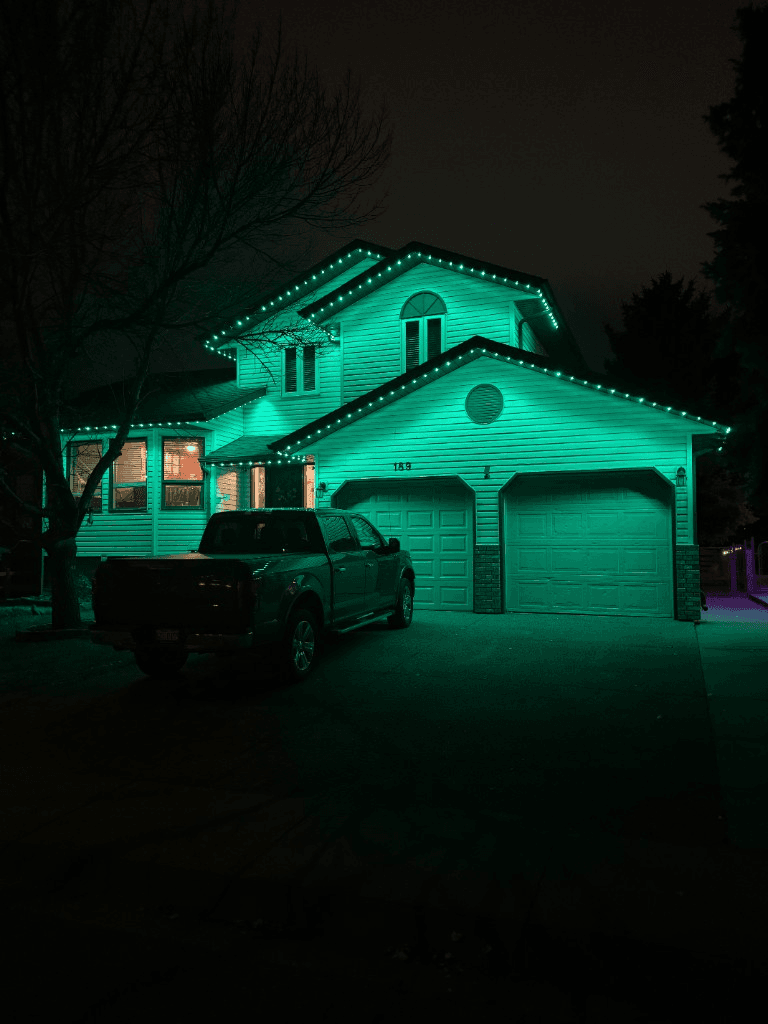 From our gallery
Many homeowners compare permanent lighting systems as if every puck is basically the same. From the street, that can seem true. Under the lens, inside the wiring path, and over years of weather, it is not true at all.
That is where Puck LED Gen 3 separates itself from commodity puck systems. The real differences are not only color count or app screens. They are the engineering decisions inside the puck: the conductor material, the surge strategy, the seal, the safety listing, and the optical shape that controls how the light actually lands on the house.
This guide breaks down what makes RGBW puck lights different, why per-puck surge protection matters more than a single board-level protector, and how IP68 puck lights, a UL listed LED system, and convex lens outdoor lighting create a better long term result.
What Puck LED Gen 3 actually is
Gen 3 is a premium outdoor puck lighting platform built for permanent roofline and architectural installs. It combines full RGB color with warm white and cool white diodes, so one hardware system can handle everyday architectural white, holiday scenes, sports colors, and more detailed effects.
That matters because many homeowners do not want one set of lights for Christmas and a different set for year round curb appeal. They want one puck platform that can do both well.
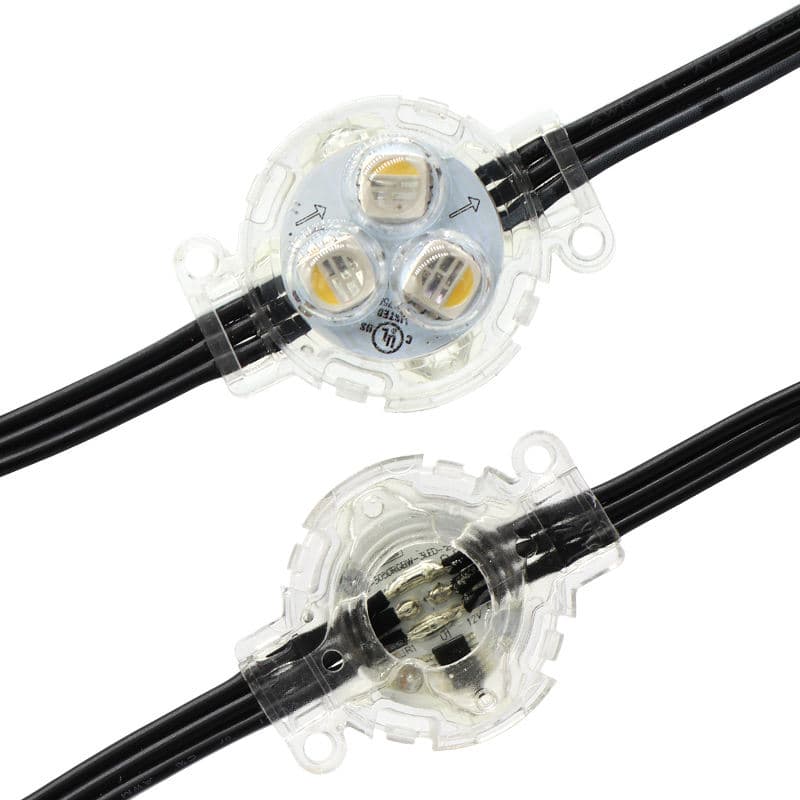
In practice, that means Gen 3 is designed for:
- permanent architectural white lighting
- full RGB holiday scenes
- warm and cool white tuning
- individually addressable puck control
- long term outdoor reliability
Why RGBW puck lights are better than basic RGB pucks
The extra white channels are not a gimmick. They solve a real quality problem.
Basic RGB systems can create many colors, but they often produce weak or muddy whites because they are trying to fake white by blending red, green, and blue. RGBW puck lights add dedicated warm white and cool white diodes so you get cleaner house lighting when you want subtle, everyday use.
That gives homeowners more flexibility:
- warm white for softer evening curb appeal
- cool white for a crisper architectural look
- full RGB for holidays and events
- smoother pastel scenes and cleaner mixed tones
This is one of the biggest differences between a puck built for year round living and a puck built mainly for seasonal effects.
Why gold wiring inside the puck matters
Most pucks use standard copper conductors internally. Copper can oxidize over time, especially in outdoor environments where moisture, temperature swings, and years of use are part of the picture.
Gen 3 uses gold wire LED module paths internally to keep the signal surface more stable and corrosion resistant. That matters because oxidation does not just sound technical. It affects real output:
- color accuracy degrades
- flicker can appear
- signal quality can weaken
- long term reliability drops
When the internal path stays cleaner and more stable, the puck is more likely to perform in year five the way it performed on install day.
Why per-puck surge protection matters more than a single protector
One of the most important upgrades in Gen 3 is per-puck surge protection.
On many systems, one electrical event can travel through the run and damage multiple connected modules. That turns a small problem into a large repair. Gen 3 isolates protection at the puck level, so the event is clamped at the module where it happens instead of cascading through the whole string.
| Feature | Many Competitors | GOULY Gen 3 |
|---|---|---|
| Feature | Typical puck competitor | ✓GOULY Puck LED Gen 3 |
| White channels | RGB only or weaker white blending | ✓RGBW with warm and cool white |
| Internal conductor | Standard copper | ✓Gold internal wiring |
| Surge protection | Single board or limited protection | ✓Per-puck surge protection |
| Waterproof rating | IP44 or IP65 on many systems | ✓IP68 puck lights |
| Safety listing | Varies or partial component claims | ✓UL listed LED system with cUL compliance |
| Beam shape | Narrow hot spots | ✓Convex lens for wider, smoother spread |
| Control precision | Grouped control | ✓Single puck addressing |
That is a major ownership difference. In real terms, it can mean replacing one puck instead of rebuilding a much larger section.
Why IP68 puck lights matter in real weather
Brochure language like “weather resistant” is not enough. What matters is the actual rating and what it means when the puck sees standing moisture, blowing snow, freeze thaw cycles, and refreeze.
IP68 puck lights are built for a much more demanding environment than basic splash-resistant products. That matters in Alberta because winter is not just cold. It is melt, moisture movement, refreeze, and repeated stress on every housing and seal.
If water gets inside the puck:
- the housing can crack after freezing
- the board can short
- the signal path can degrade
- the life of the module drops fast
That is why sealing is not a detail. It is one of the core reasons a permanent lighting system either survives or disappoints.
Why a UL listed LED system matters
A lot of products are marketed as if a component listing is the same as system safety. It is not.
A UL listed LED system means the installed system has been evaluated with its wiring, power, and weatherproofing working together. In Gen 3, that also includes cUL compliance, which matters for Canadian standards and homeowner confidence.
This is important because safety is not just about the puck body. It is about the full installed path:
- the puck
- the wiring
- the protection strategy
- the control hardware
- the way those parts operate together outside
For homeowners, that translates into better confidence in the product, the installation, and the long term risk profile.
It also matters for insurance and liability. When an outdoor lighting system is built from uncertified or loosely assembled parts, homeowners can be left in a grey area if something electrical goes wrong. A properly listed system helps show that the installed path was built around recognized safety standards instead of improvised components.
That matters because certification is not just a sticker. It is about whether the system has been evaluated for the kinds of failures that actually create risk, such as:
- electrical faults
- short circuit conditions
- heat buildup
- component interaction under load
- weather exposure as part of the full installed path
The practical benefits are straightforward:
- better homeowner confidence
- stronger professional credibility on the quote
- a clearer safety story for the full installation
- less dependence on generic import claims or partial component marketing
If an installer says the system is “basically certified” but cannot explain whether the full installed setup is listed and compliant, that is a red flag.
Why convex lens outdoor lighting looks better on the house
The optical shape of the puck changes the whole visual result.
Flat or weaker optics often create bright spots directly under each puck with darker gaps in between. That makes the roofline look dotted or striped instead of clean. Convex lens outdoor lighting spreads the output more evenly across the facade and farther outward, which creates a smoother wash.
Wide-beam optics
Even facade wash · smooth downward throw
That usually means:
- more even facade lighting
- fewer harsh hot spots
- better downward throw
- better yard spill and visual coverage
- a more professional finished look
The lens is a big reason one roofline looks polished while another looks like a row of visible light points.
Single puck control changes scenes and troubleshooting
Gen 3 is not only about hardware. It is also about what the hardware lets you do.
Because the pucks are individually addressable, you can control one puck at a time instead of only working in broad batches. That improves creativity and maintenance at the same time.
For homeowners, that means:
- more detailed scenes
- cleaner color transitions
- better holiday effects
- more precise zone behavior
For service, it means a technician can test a specific puck without disturbing the rest of the run.
What to ask before you buy
If you are comparing puck systems, ask these questions:
- Are these true RGBW puck lights or only RGB?
- What is the exact waterproof rating of the puck?
- Is the full install a UL listed LED system or just individual parts?
- Is surge protection built into each puck or only elsewhere in the system?
- What type of optic or lens controls the beam spread?
- Can each puck be controlled and tested individually?
- What is inside the puck that protects long term signal quality?
A premium puck should have clear answers for all of those.
The bottom line on Puck LED Gen 3
The value of Puck LED Gen 3 is not one flashy feature. It is how the whole puck is engineered: RGBW output, gold internal wiring, per-puck surge protection, IP68 sealing, UL and cUL compliance, and convex optics that make the light land better on the house.
That is what makes Gen 3 different from a commodity puck. It is not just a permanent light that turns on. It is a full time architectural and seasonal lighting platform built to look better, last longer, and be easier to trust.
For the bigger picture, explore The System, open the full Puck LED Gen 3 guide, or try the live GOULY app preview.
Frequently asked questions
Gen 3 combines RGBW output, gold internal wiring, per-puck surge protection, IP68 sealing, UL and cUL compliance, and convex optics built for smoother real-world facade coverage.
RGBW adds dedicated warm white and cool white channels, which creates cleaner architectural white lighting and better mixed tones than relying on RGB blending alone.
It helps isolate electrical events at the module level, which can reduce the chance that one surge damages a much larger section of the run.
Yes. IP68 protection is important when pucks face standing moisture, snow melt, freeze thaw cycles, and repeated refreezing through the winter.
It spreads the light more evenly so the facade looks smoother and less dotted, with better downward and outward coverage.
Questions before you book?
Visit our FAQ page
Get quick answers on Gen 3 Lighting, pricing, install timelines, app setup, warranty, and what to expect on install day.