Permanent lights are professionally installed outdoor LED lighting systems that are mounted to your home's roofline and stay up year-round. Unlike temporary Christmas lights that go up in November and come down in January, permanent lights are designed to remain on your home permanently, controlled by a mobile app that lets you change colours, patterns, and schedules for any occasion, any season, without ever touching a ladder.
This guide is the complete reference for permanent outdoor lighting: what it is, how it works, what it costs, how it compares to temporary lights, and what to look for when choosing a system and installer.
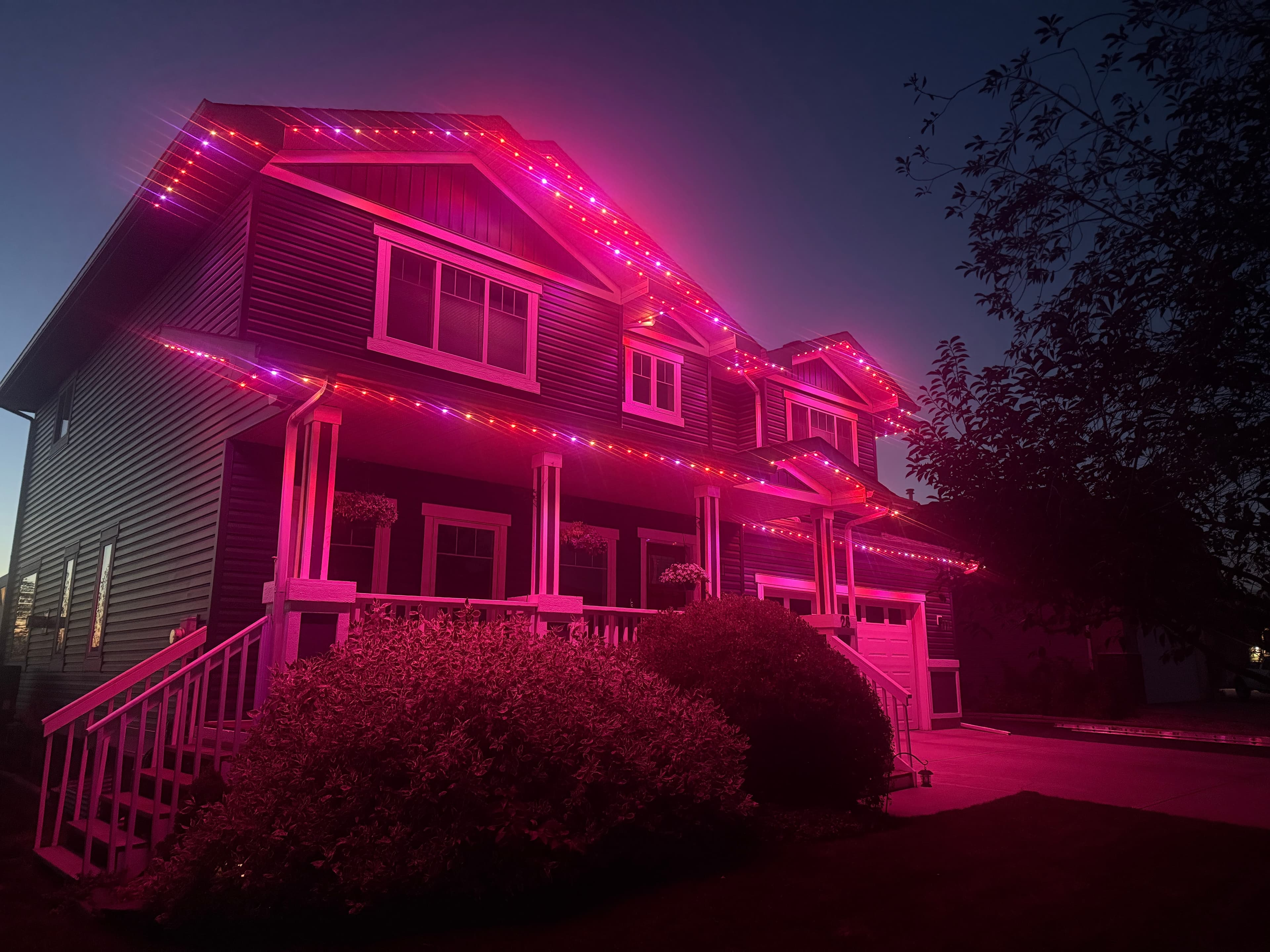
How permanent lights work
A permanent lighting system has four core components:
1. LED light nodes
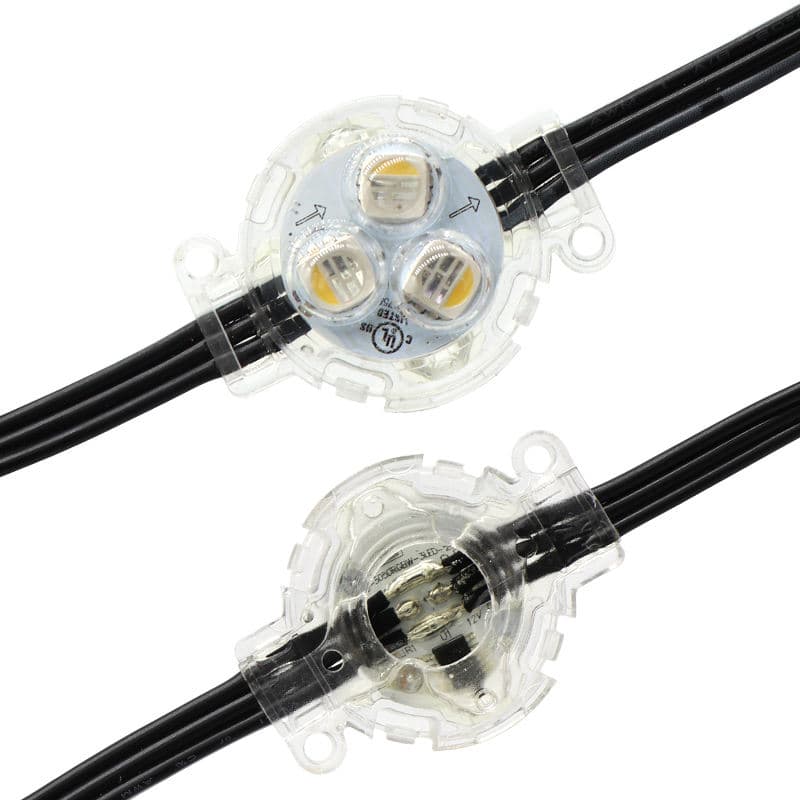
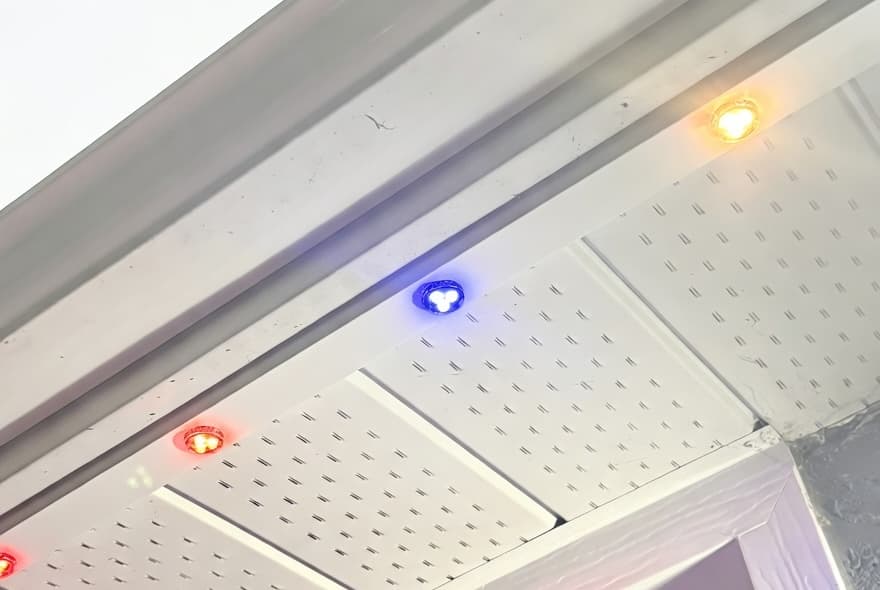
Individual LED modules (often called pucks or nodes) are spaced evenly along your roofline. Each node is individually addressable, meaning it can display any colour independently of the nodes beside it. This is what enables patterns, gradients, chase effects, and the ability to change your entire display from the app.
Modern systems use RGBW (red, green, blue, white) LEDs, which produce over 16 million colour combinations including true warm white and cool white. This is a significant upgrade over older RGB-only systems that could not produce a clean, natural white tone.
2. Aluminum track channel
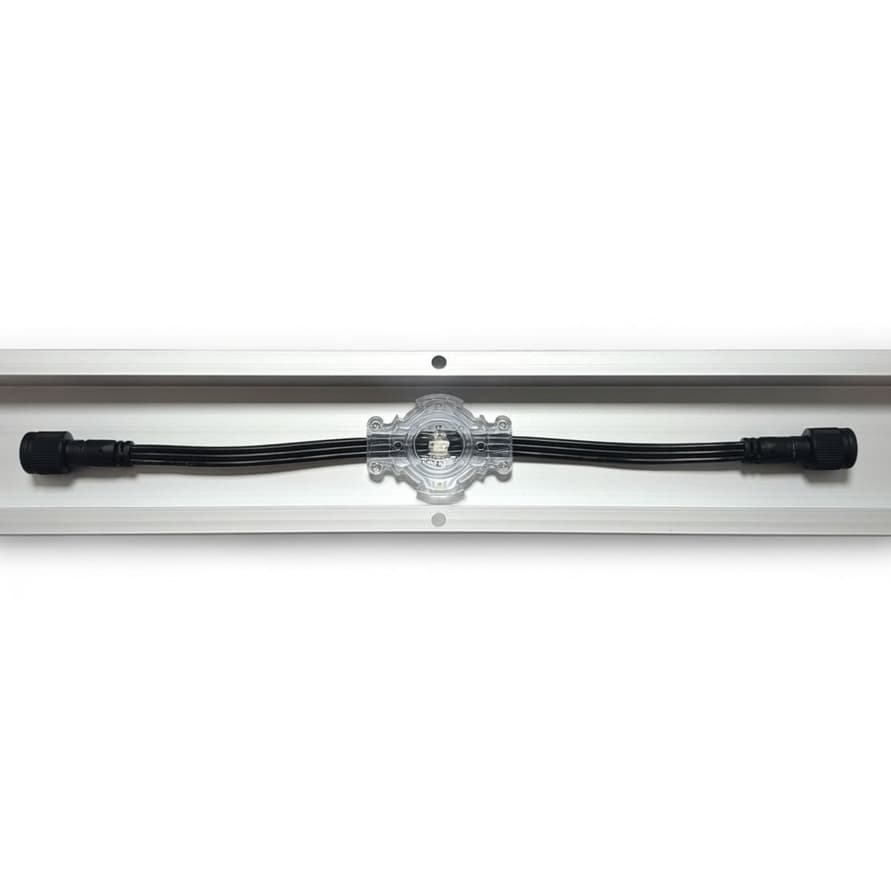
The LED nodes sit inside a purpose-built aluminum track that mounts flush to your fascia board or soffit. The track serves three purposes:
- Protection. It shields the wiring and LED modules from weather, UV exposure, and physical damage
- Clean appearance. The track creates a finished, architectural look that blends with your roofline rather than looking like temporary lights tacked on with clips
- Heat dissipation. Aluminum acts as a heatsink, drawing heat away from the LEDs and extending their lifespan
3. Control box (transformer and controller)
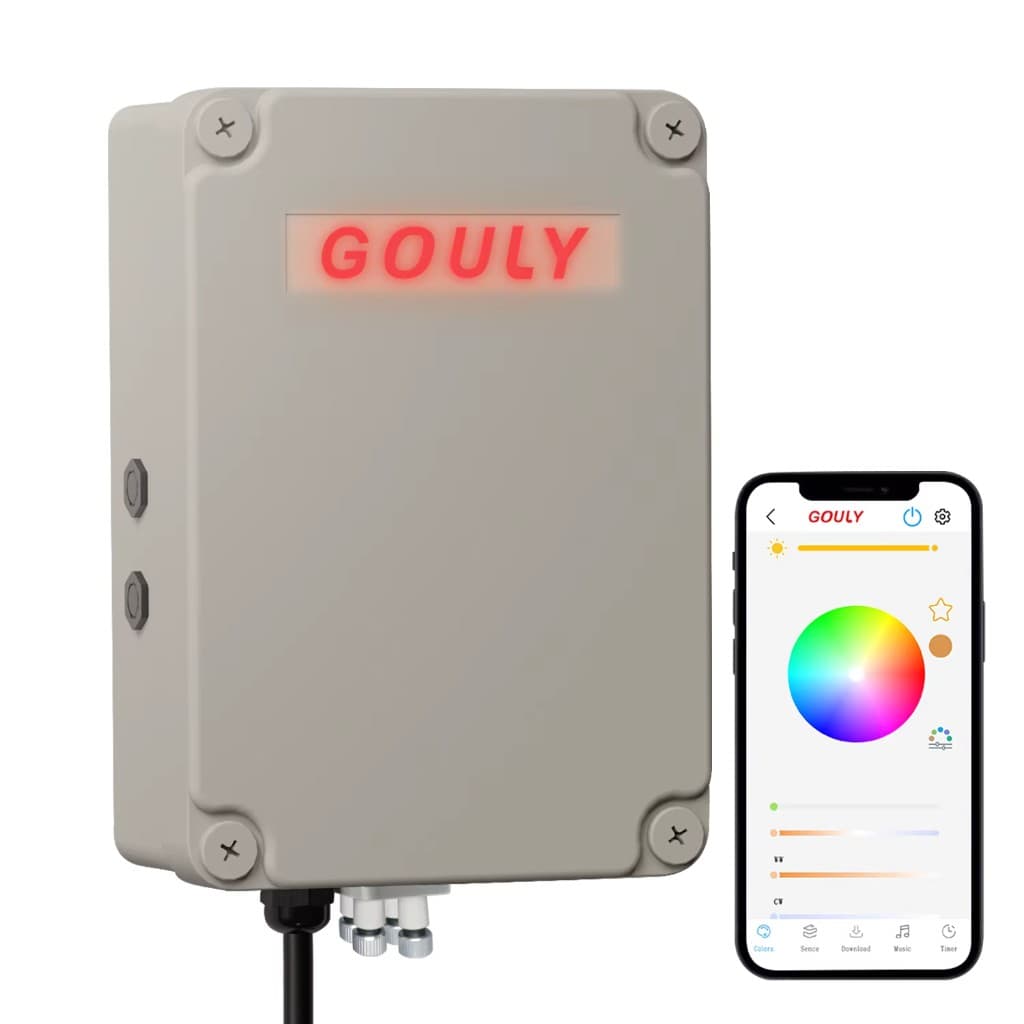
A weatherproof control box is mounted in a discreet location near your electrical panel or exterior outlet. This box contains:
- Transformer. Converts standard 120V household power to low voltage (typically 24V or 12V) for safe operation
- Controller. The brain of the system that communicates with the app and tells each LED node what colour and brightness to display
- WiFi or Bluetooth module. Connects the system to your home network so you can control it from your phone
The best systems use 24V architecture, which allows longer wire runs without voltage drop, brighter output at the far ends of the run, and more consistent colour accuracy across the full roofline. 12V systems are cheaper but suffer from dimming on runs longer than 50 feet.
4. Mobile app
The app is how you interact with your lights daily. A good permanent lighting app lets you:
- Choose from hundreds or thousands of pre-built patterns and scenes
- Create custom colour palettes and save them to folders
- Set schedules (on at sunset, off at midnight, etc.)
- Control brightness from 0 to 100 percent
- Set chase, fade, twinkle, and other animation effects
- Share patterns with other users
- Control multiple zones independently (front yard, backyard, sides)
For a hands-on example, explore the GOULY app preview to see how app-controlled patterns work on a real system.
What permanent lights look like on a home
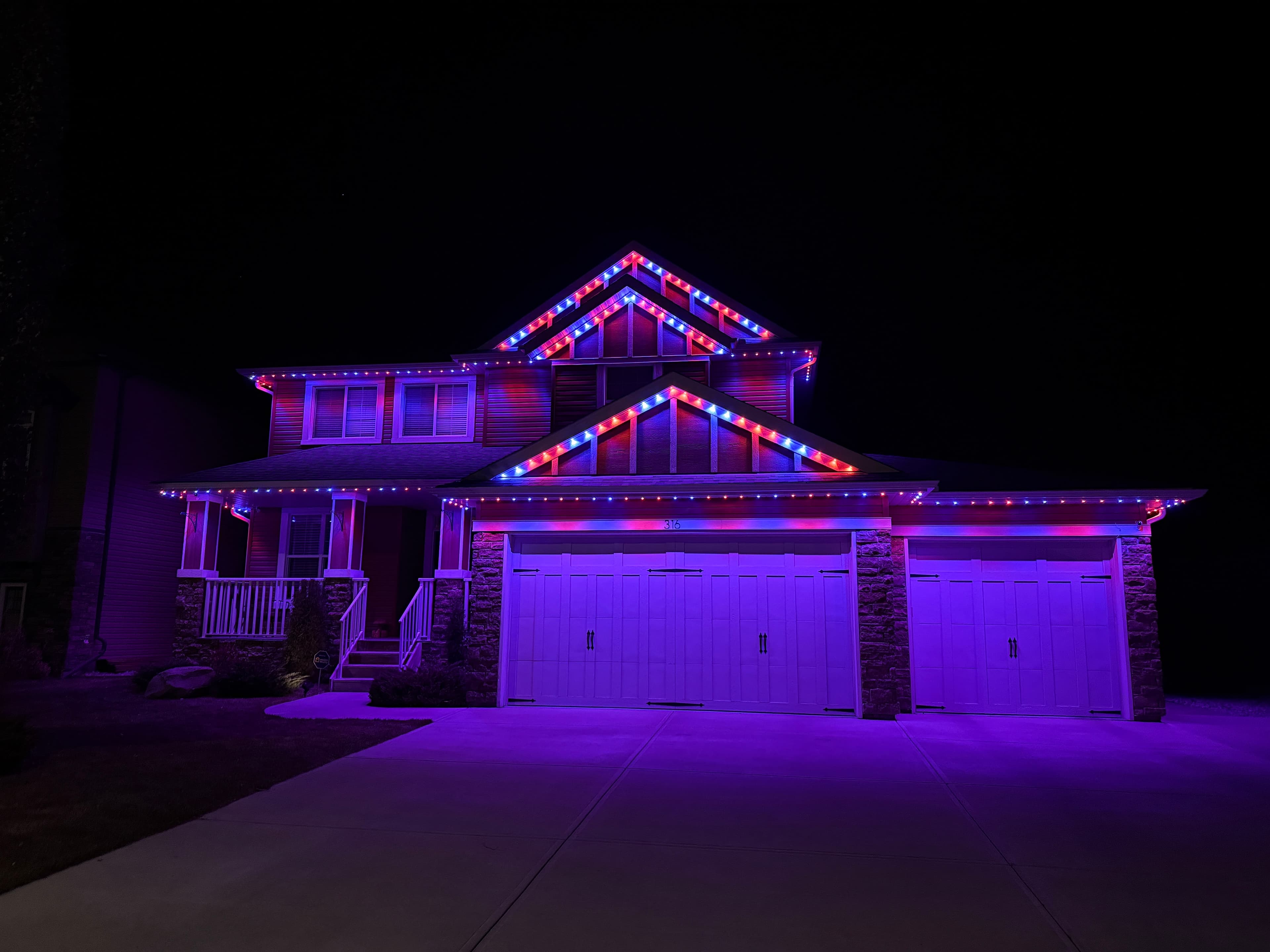
During the day, a well-installed permanent lighting system is nearly invisible. The aluminum track blends with your fascia or soffit, and the LED nodes sit recessed inside the channel. Most visitors will not notice the system at all until it is turned on.
At night, the effect is dramatic. The LEDs create a clean, continuous line of light along your eave line that can be:
- Solid warm white for everyday architectural elegance
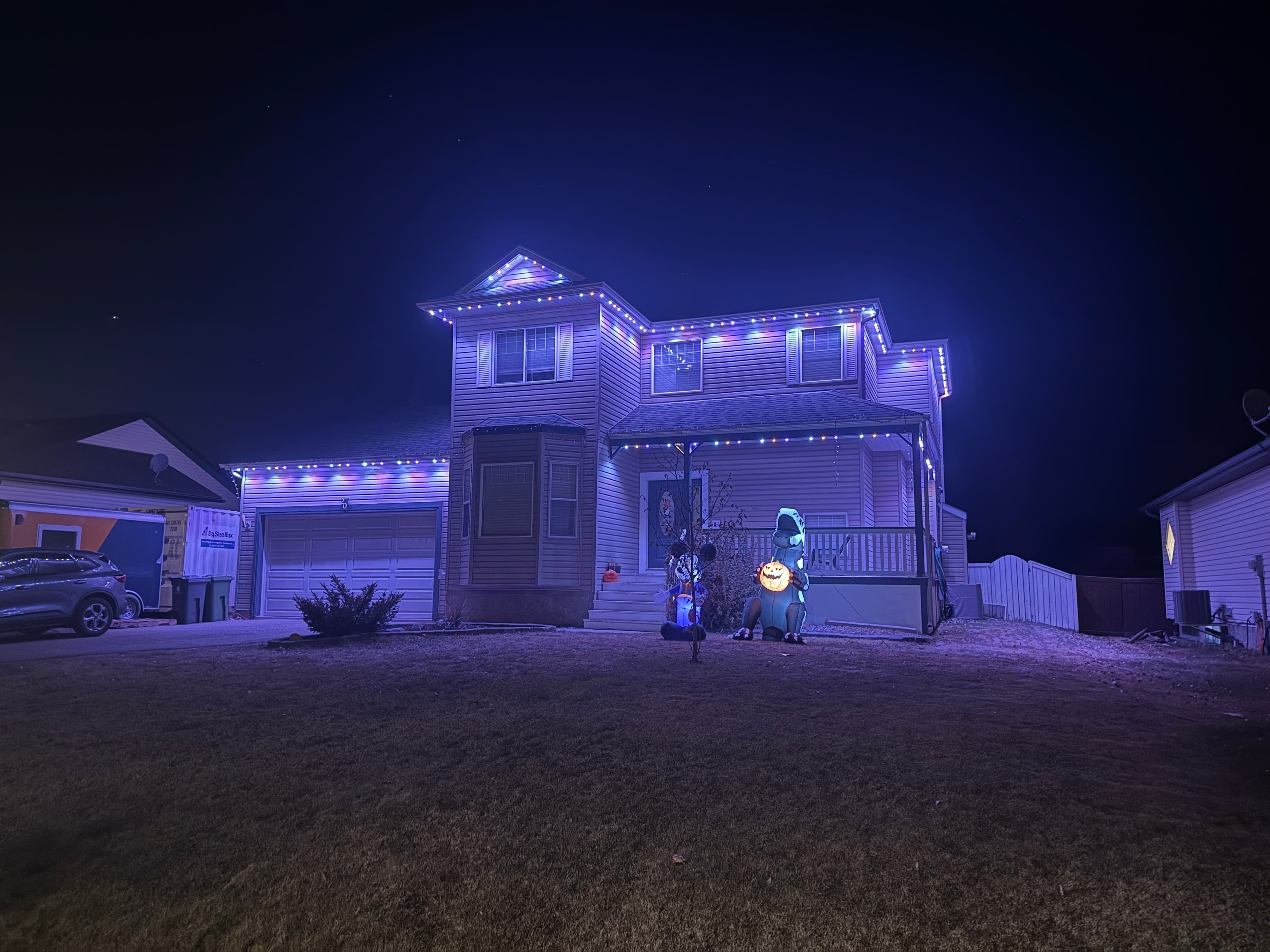
- Holiday colours like red and green for Christmas, orange and purple for Halloween, or pastels for Easter
- Team colours for game day, from Calgary Flames to LA Lakers
- Patriotic for Canada Day or Independence Day
- Animated with chasing, fading, twinkling, or colour-cycling effects
- Completely off when you want darkness
Browse our Designs page or outdoor lighting ideas for examples of what different patterns and holidays look like on real homes.
Permanent lights vs temporary Christmas lights
This is the comparison most homeowners are making when they first discover permanent lighting:
| Factor | Temporary Christmas lights | Permanent lighting system |
|---|---|---|
| Installation | Hang every November, remove every January | Install once, stays up forever |
| Ladder work | Twice per year minimum | Zero, ever |
| Annual cost | $200 to $600 per year (lights, clips, hanging, removal) | $0 after initial install |
| Colour options | Whatever you bought at the store | 16 million colours, changeable from your phone |
| Fascia damage | Staples, clips, and nail holes every year | Clean track mount, no penetration |
| Weather rating | Not rated, degrades in one season | IP68, rated to minus 40 degrees Celsius |
| Use beyond Christmas | None (they look terrible in February) | 365 days of year-round curb appeal |
| Animations | Static only (maybe twinkle) | Chase, fade, twinkle, pulse, music sync, and more |
| Lifespan | 1 to 2 seasons before replacement | 50,000+ hours (10 to 15 years of daily use) |
| Resale value impact | Negative if left up past January | Positive, recognized as a home upgrade |
The math is straightforward. If you spend $300 to $500 per year on temporary lights (including professional hanging and removal), a permanent system pays for itself within 2 to 4 years, and then saves you money every year after that while providing year-round functionality.
How much do permanent lights cost?
Permanent lighting costs vary by home size, system quality, and installer. Here are typical ranges for a professionally installed system in 2026:
| Home type | Linear footage | Typical installed price |
|---|---|---|
| Bungalow | Around 150 ft | $4,500 to $5,500 |
| Two storey | 150 to 200 ft | $4,500 to $6,500 |
| Large two storey | 200 to 300 ft | $4,500 to $7,500 |
| Estate or luxury | 250 to 400+ ft | $7,500 to $12,000+ |
What is typically included
- LED nodes and aluminum track for your full eave line
- Weatherproof control box with transformer and controller
- Professional installation and cleanup
- App setup and walkthrough
- Manufacturer warranty (typically 3 to 5 years)
What drives the price up or down
- Linear footage. More roofline means more materials and labour
- Roofline complexity. Multiple peaks, dormers, and varied heights take longer to install
- System voltage. 24V systems cost more than 12V but deliver better performance
- Access difficulty. Three-storey homes or steep pitches require more equipment
- Add-ons. Soffit lighting, downlighting, or pathway integration add cost
The 24V vs 12V price difference
Most reputable installers use 24V systems. The typical price difference between 24V and 12V is around 20 to 30 percent for the same home. The extra cost buys you:
- Brighter, more consistent output on long runs
- Less voltage drop (no dimming at the far end)
- Better cold-weather performance
- Longer lifespan
- More reliable colour accuracy
12V vs 24V
Real project math: upfront cost, brightness, and power
Same roofline footprint (about 250 to 350 ft). Budget 12V quotes often land near 70% of a 24V Premium install, but you typically trade away output consistency and long-run stability.
| System | Typical installed range | Upfront vs 24V | What you feel |
|---|---|---|---|
| 24V Premium (IP68) | $4,500 to $6,500 | 100% | Brighter, longer runs, more stable output |
| 12V budget competitor | $2,100 to $3,150 | ~70% | Lower upfront cost, higher dim and failure risk |
Brightness (illustrative)
Higher bar means more usable output on the same layout.
24V Premium
~90%
12V budget
~50%
Est. annual electrical cost
Illustrative Alberta rates; LEDs stay efficient either way.
12V budget baseline
~$50/yr
24V Premium
~$55/yr
24V can run slightly higher on paper while delivering much stronger light.
For a detailed breakdown, see our 24V permanent lights guide.
Key specifications to look for
Not all permanent lighting systems are equal. Here are the specifications that matter when comparing options:
IP rating
The IP (Ingress Protection) rating tells you how well the system is protected against water and dust. Look for IP68, which means:
- 6 = completely dust-tight (no ingress of dust)
- 8 = protected against continuous immersion in water
IP68 is the highest practical rating for outdoor lighting. Systems rated IP65 or IP67 are water-resistant but not fully waterproof. In a climate like Calgary's with heavy rain, snow, and freeze-thaw cycles, IP68 is the standard you want.
Voltage
- 24V (recommended): Handles long runs (200+ ft) without dimming, better cold-weather performance, brighter output
- 12V: Cheaper upfront, but dims on runs over 50 ft, struggles in extreme cold, requires more power supplies for larger homes
LED type
- RGBW (recommended): Four-channel LEDs that produce true warm white and cool white in addition to full colour spectrum. Essential for everyday architectural lighting.
- RGB: Three-channel LEDs that can only produce colours, not a clean white. White from RGB LEDs looks blue-purple, not warm or natural. Avoid for permanent residential use.
Cold weather rating
If you live in a cold climate, confirm the system is rated for your conditions. In Alberta, look for systems rated to minus 40 degrees Celsius or lower. Some budget systems are only rated to minus 20, which means they may fail or dim significantly during cold snaps.
Lifespan
Quality LED nodes are rated for 50,000+ hours of operation. At 8 hours per day, that is over 17 years. At 4 hours per day (a typical evening schedule), that is over 34 years.
For a deeper dive into durability specs, see our outdoor LED durability guide.
The installation process
A professional permanent lighting installation typically follows this process:
1. Quote and design
The installer visits your home (in person or virtually) to measure your roofline, assess access requirements, and discuss your preferences. You receive a quote based on linear footage and complexity.
2. Installation day
A crew arrives with all materials and equipment. The typical installation takes:
- Bungalow: 4 to 6 hours
- Two storey: 6 to 8 hours
- Estate or luxury: 1 to 2 days
The crew mounts the aluminum track along your eave line, installs the LED nodes, runs low-voltage wiring to the control box, and connects the system to power.
3. App setup and walkthrough
Before the crew leaves, they connect the system to your WiFi, install the app on your phone, and walk you through how to use it: changing colours, loading patterns, setting schedules, and saving scenes to folders.
4. Cleanup
A professional installer cleans up all packaging, wire scraps, and ladder marks. Your home should look like the crew was never there, except for the new track on your roofline.
What can you use permanent lights for?
This is where permanent lights separate themselves from every other exterior lighting option. One system handles every use case:
Holiday lighting
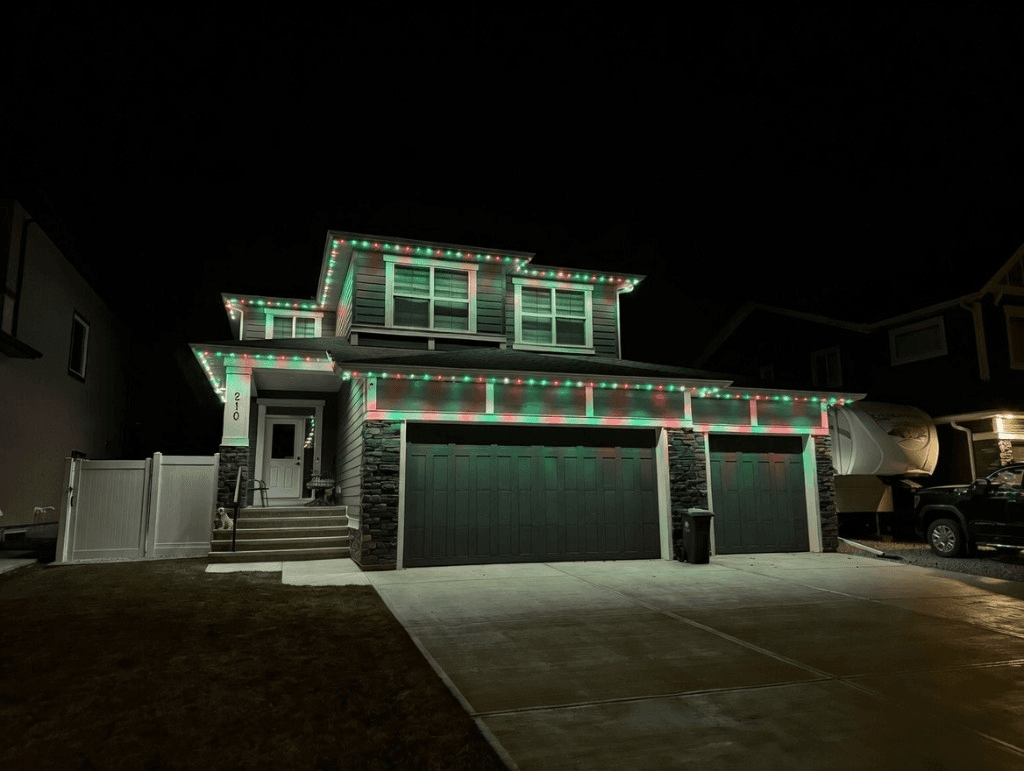
Christmas, Halloween, Easter, Thanksgiving, Valentine's Day, St. Patrick's Day, Diwali, Hanukkah, and any other holiday you celebrate. Switch between holidays with one tap in the app. Browse our holiday light designs for free downloadable patterns.
Everyday curb appeal
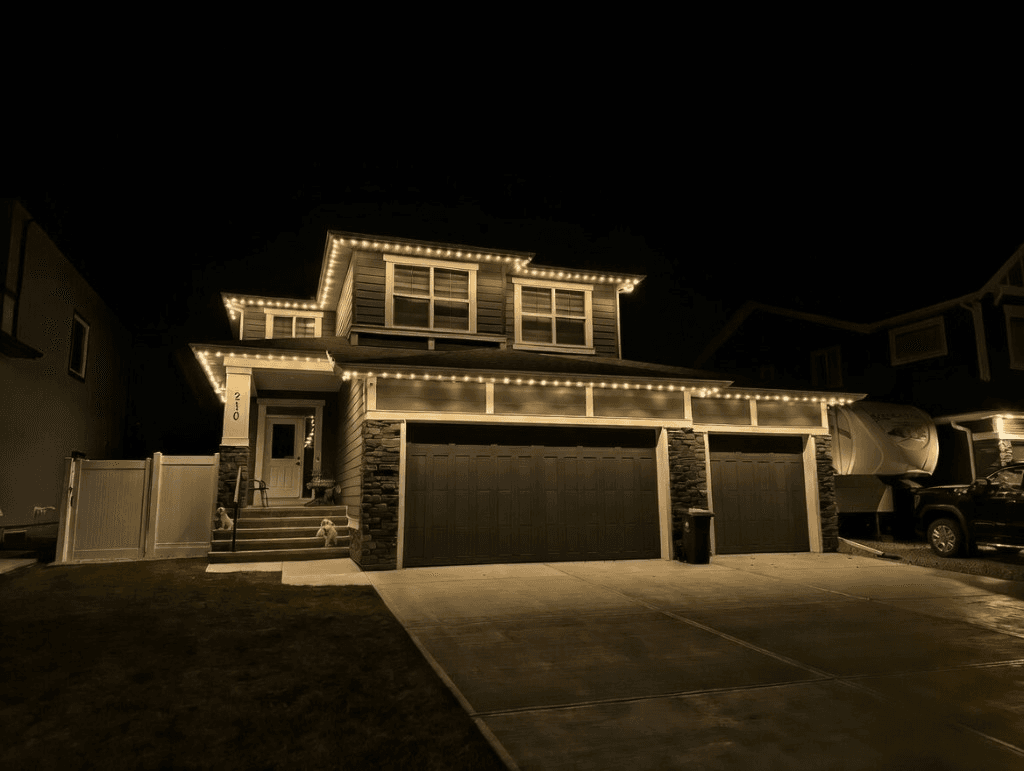
Warm white or cool white architectural lighting that runs every evening. This is the most common daily use. Your home looks elegant and well-lit without any holiday theme.
Game day and team pride
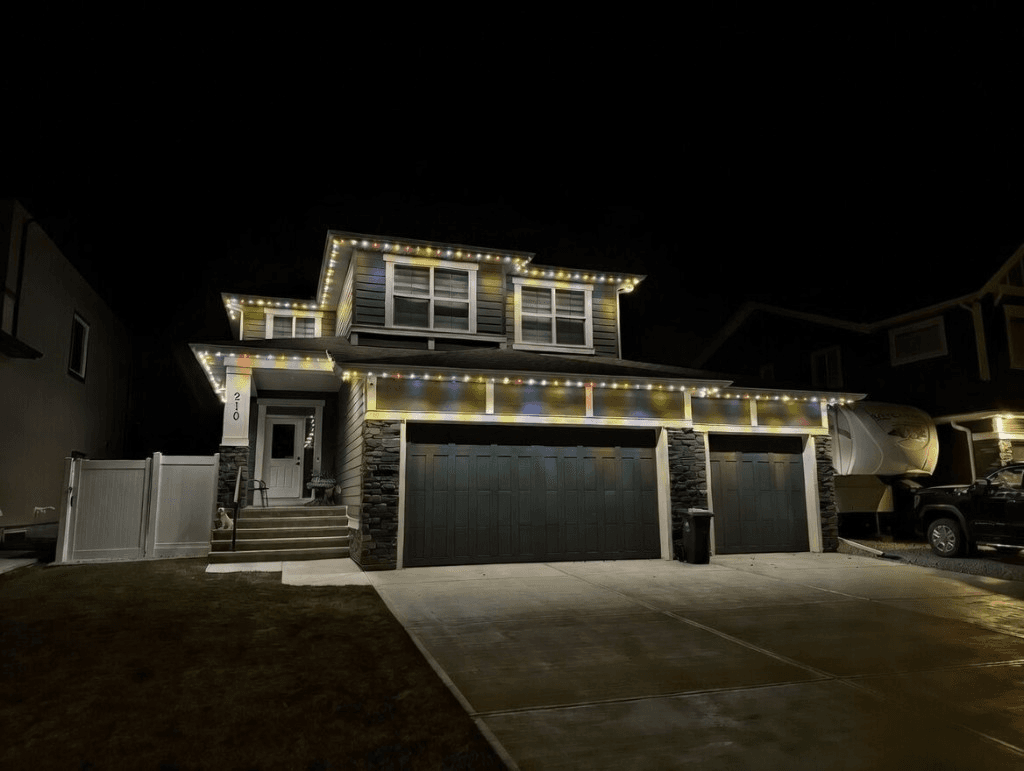
Match your favourite team's colours for game night. NHL, NBA, NFL, MLB, CFL, and any other league. Switch to team colours before the game and back to white after. We offer free patterns for dozens of teams.
Security lighting
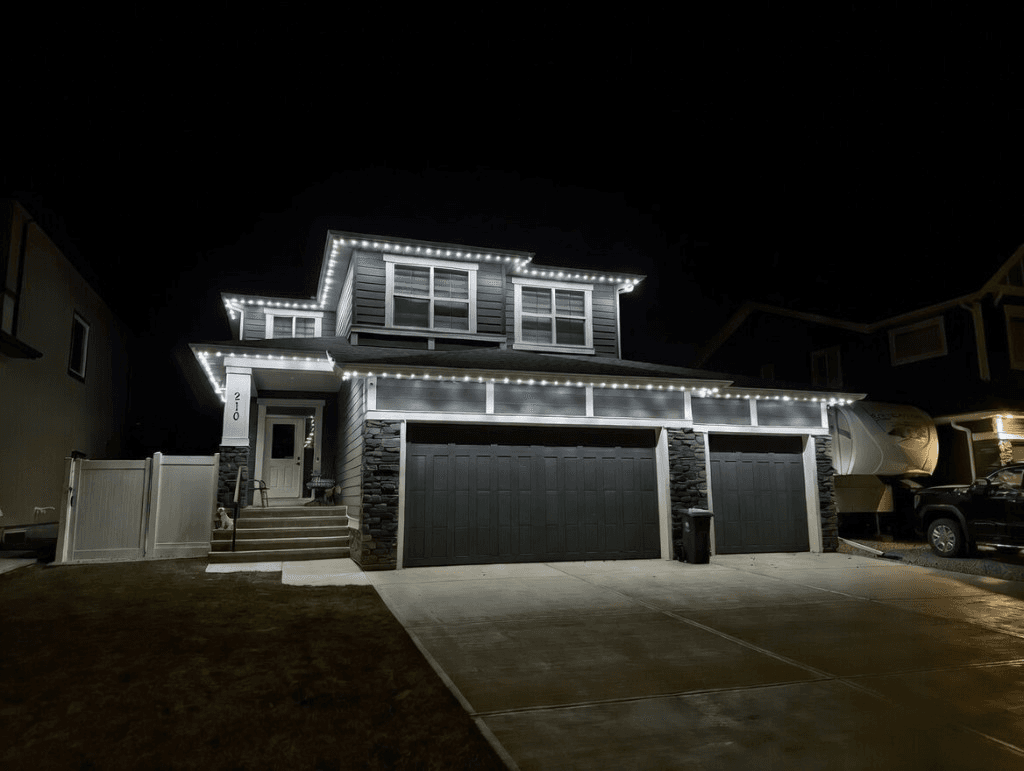
Bright white perimeter lighting that deters intruders and illuminates your property. Schedule it for dusk to dawn or trigger it with Alexa or Google Home. Read our home security with smart lighting guide to learn how.
Special occasions
Birthdays, anniversaries, gender reveals, graduations, or any personal celebration. Custom colours for any event, set up in seconds.
Seasonal ambiance
Spring pastels, summer warm whites, autumn amber tones, winter cool whites. Change with the seasons without any physical modification.
How to choose an installer
The system is only as good as the installation. Here is what to look for:
Questions to ask
- What voltage system do you install? (24V is the answer you want)
- What is the IP rating of the LED nodes? (IP68 is the standard)
- What brand or manufacturer do you use? (Ask for specifics, not generics)
- Is the control box UL or CSA listed? (This is a safety certification for electrical equipment)
- What warranty do you offer? (3 to 5 years on hardware is standard)
- Do you include app setup and walkthrough? (This should be included, not an upsell)
- What is your cold weather rating? (Minus 40 for Alberta)
- Can I see photos of previous installs? (Any reputable installer will have a gallery)
Red flags
- No specifics on voltage or IP rating. If the installer cannot tell you whether the system is 12V or 24V, or what the IP rating is, they may not know what they are installing.
- No warranty. A system with no warranty is a system the installer does not stand behind.
- Pressure to sign immediately. A good installer will give you a quote and let you decide on your own time.
- No local references or reviews. Check Google reviews and ask for references in your area.
- Subscription fees for the app. The app should be free. If there is a monthly or annual fee to use basic features, that is a recurring cost that adds up.
Common misconceptions
"Permanent lights are just Christmas lights that stay up"
No. Permanent lights are a completely different product. They are engineered for outdoor use, mounted in protective track, controlled by an app, and designed to display any colour for any occasion. Temporary Christmas lights are disposable string lights designed for 4 to 6 weeks of seasonal use.
"They damage your fascia"
The opposite is true. Permanent lighting track is mounted with screws into the fascia or soffit, creating a sealed, weatherproof installation. Temporary lights use staples, clips, and nails that create moisture entry points and cause rot over time. Permanent track actually protects the surface it is mounted to.
"You can only use them for Christmas"
Christmas is one of dozens of uses. Most homeowners use their permanent lights more for everyday warm white curb appeal than for any single holiday. The app gives you unlimited looks for unlimited occasions.
"They are too expensive"
Compared to 5 to 10 years of buying and hanging temporary lights, permanent lighting costs less over its lifetime. The break-even point is typically 2 to 4 years, after which you are saving money every year while getting year-round functionality that temporary lights never provided.
"The colours look fake or cheap"
This was true of early RGB systems. Modern RGBW systems produce colours that are vivid, accurate, and include true warm white that looks natural and elegant. The quality of light from a Gen 3 system is comparable to high-end architectural lighting.
"They will look dated in a few years"
The track is minimal and blends with your fascia. The LED technology updates happen in the nodes and the app, not the physical installation. As the app adds new patterns and features, your existing hardware benefits without any changes to the installation.
The history of permanent outdoor lighting
Permanent outdoor LED lighting evolved from several parallel developments:
Early 2000s: Commercial buildings began using permanently installed LED strips for architectural accent lighting. The technology was expensive and limited to single colours.
2008 to 2012: RGB LED technology became affordable enough for residential use. Early residential systems used RGB strips in aluminum channels, but lacked app control and could not produce white light.
2013 to 2016: The first app-controlled permanent lighting systems entered the market. These were primarily 12V RGB systems with WiFi controllers. The concept of "install once, control from your phone" began to gain traction with homeowners.
2017 to 2020: RGBW technology became the standard, adding a dedicated white LED channel for true warm and cool white. 24V systems emerged to solve voltage drop issues on larger homes. Mobile apps matured with pattern libraries, scheduling, and sharing features.
2021 to present: The market expanded significantly. Multiple manufacturers now offer complete systems with IP68 ratings, certified control boxes, and mature app ecosystems. The product category has moved from early-adopter novelty to mainstream home improvement, with permanent lighting recognized by real estate agents and home appraisers as a value-add feature.
Permanent lighting brands and systems
The permanent lighting market includes several established manufacturers and systems. When evaluating brands, focus on the specifications that matter (voltage, IP rating, LED type, warranty, app quality) rather than brand name alone.
Key factors that differentiate systems:
- Integrated vs assembled. Some manufacturers design and build the complete system (track, nodes, controller, app) as one integrated product. Others assemble components from multiple suppliers. Integrated systems typically have better compatibility and support.
- App ecosystem maturity. The app is what you interact with daily. Look for a large pattern library, reliable scheduling, good user interface, and regular updates.
- Certified electrical components. The control box should carry UL, CSA, or equivalent safety certification for outdoor wet-location use.
- Manufacturer support. A manufacturer with a track record (10+ years in business) is more likely to provide ongoing app updates, replacement parts, and warranty support.
For a detailed look at the GOULY ecosystem used by Number One Lights, see our GOULY ecosystem guide.
Permanent lights and home value
Permanent outdoor lighting is increasingly recognized as a home improvement that adds value:
- Curb appeal. A well-lit home stands out in every season. Real estate agents consistently report that exterior lighting is one of the first things buyers notice.
- Move-in ready feature. Buyers see permanent lights as one less thing to install after purchase, similar to a smart thermostat or built-in speakers.
- Year-round functionality. Unlike a pool (seasonal) or a hot tub (high maintenance), permanent lights provide value every single day with zero ongoing cost.
- Modern expectation. In newer developments and higher-end communities, permanent lighting is becoming an expected feature rather than a luxury upgrade.
The exact dollar value added varies by market, but the combination of daily curb appeal, zero maintenance cost, and year-round functionality makes permanent lighting one of the highest-ROI exterior improvements a homeowner can make.
Frequently asked questions
How long does installation take? Typically 4 to 8 hours for a standard home. Larger or more complex homes may take 1 to 2 days.
Do permanent lights use a lot of electricity? No. LED lighting is extremely efficient. A typical permanent lighting system uses 50 to 150 watts, which costs roughly $2 to $5 per month in electricity at average Alberta rates running 6 hours per day.
Can I install permanent lights myself? It is possible but not recommended. Professional installation ensures proper mounting, weatherproofing, electrical safety, and warranty coverage. DIY installations often void the manufacturer warranty and may not meet electrical code requirements.
Do permanent lights work in extreme cold? Yes, if the system is rated for it. Quality systems rated to minus 40 degrees Celsius operate reliably through Alberta winters with no performance loss.
What happens if a single LED node fails? On a well-designed system with singular LED modules, a technician can replace the individual node without affecting the rest of the system. This is a quick, inexpensive repair.
Can I control the lights when I am away from home? Yes. The app connects through WiFi and cloud, so you can control your lights from anywhere in the world with an internet connection.
Do I need to turn them off in summer? No. The system is designed for year-round outdoor use. Many homeowners run warm white architectural lighting every evening year-round.
Will the track damage my roof or void my roofing warranty? The track mounts to the fascia or soffit, not the roof surface or shingles. It does not affect your roofing warranty.
Getting started
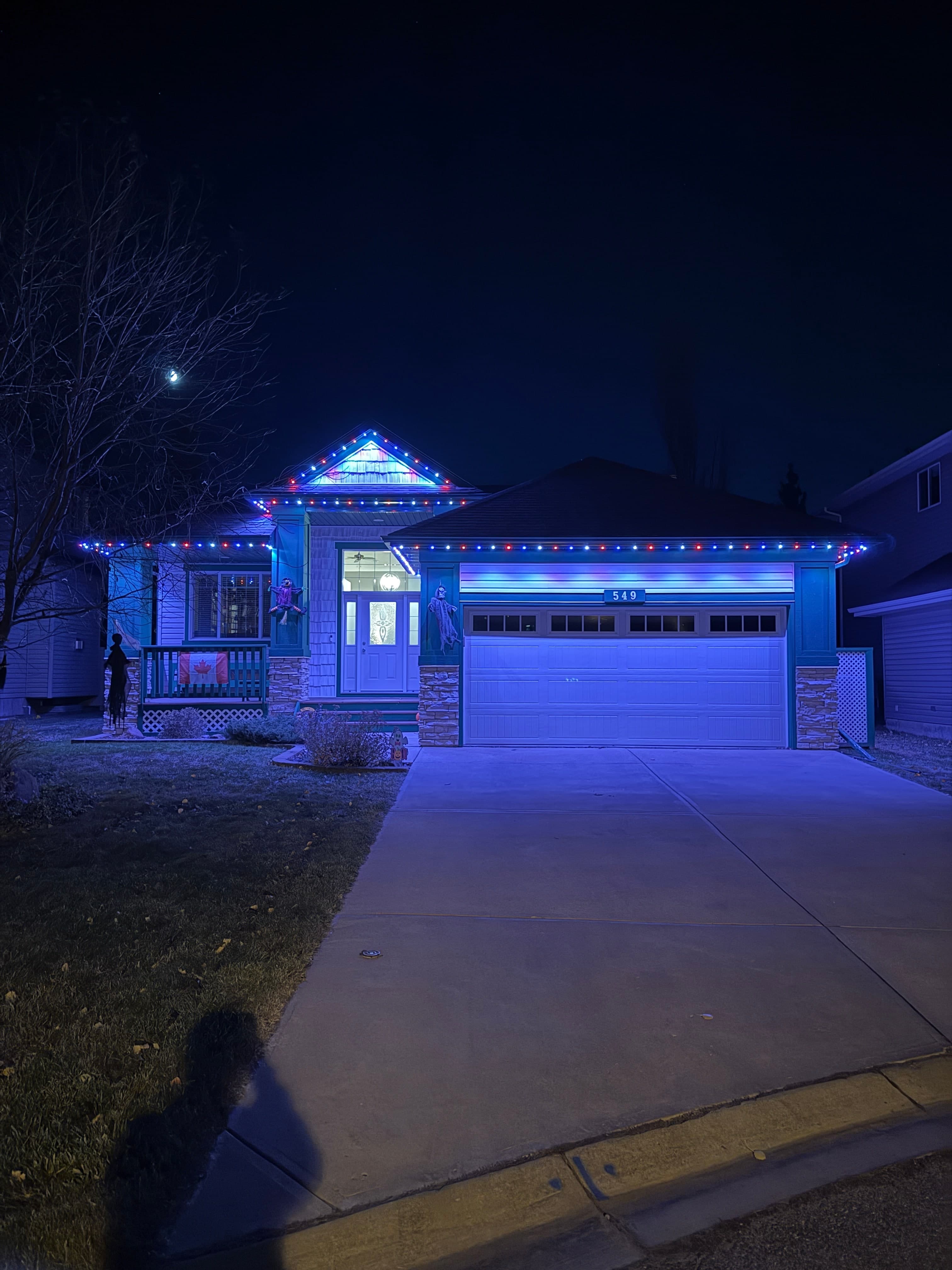
If you are considering permanent lights for your home, here is the path forward:
- Learn about the system. You are already doing this. Explore our system overview for details on hardware and software.
- See real examples. Browse our gallery for photos of actual installations on Calgary-area homes.
- Try the app. Open the GOULY app preview to see how colours, patterns, and controls work on a live house simulation.
- Get a quote. Request a free virtual quote with a photo of your home. A team member will review your roofline and provide a clear, honest price.