A balanced buyer's guide for homeowners deciding whether to upgrade from cheap LED strip lights to a permanent outdoor LED system.
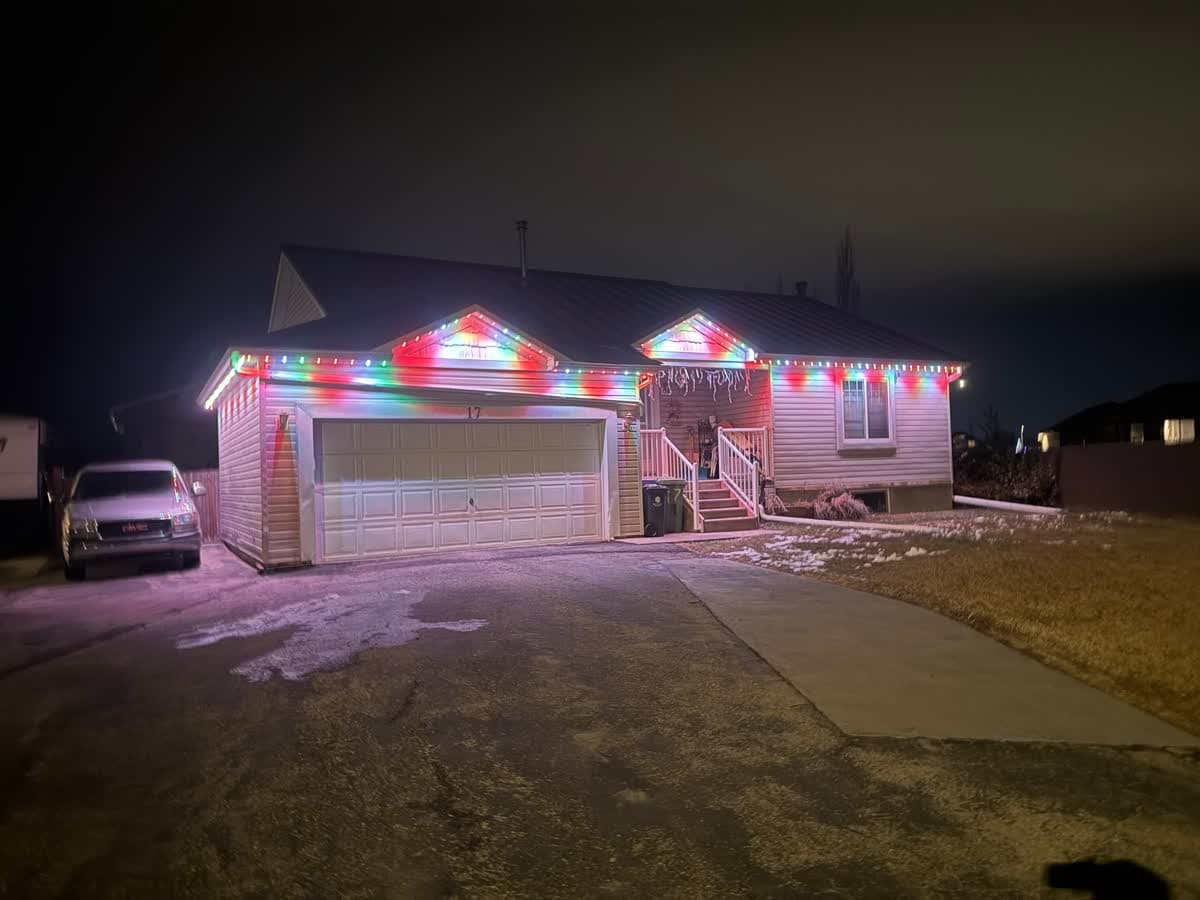 From our gallery
You bought the strips because they looked easy. A bright box at the hardware store, a familiar brand name, a phone app on the back of the package, and a price that made the whole thing feel like a no-brainer. Stick them under the eaves, plug them in, tap a button on your phone, and you have a smart-lit house. That is the promise.
If you are reading this, year two probably did not match the brochure. Maybe a section stopped responding. Maybe the app logged you out and refused to log back in. Maybe the adhesive peeled in the cold and a whole strand is hanging from a single zip tie. Or maybe the lights still work, technically, but you are tired of how they look from the curb in daylight.
This is a buyer's guide for the decision you are about to make: keep patching the strips, or upgrade to a permanent outdoor lighting system. We will lay out where LED strips genuinely shine, where they fail, what permanent lights actually are, what they cost over a decade, and how to know which side of the line you are on. If you want a more focused first-person story from a former Magic Home user, read my upgrade story. This guide is the wider, balanced version.
For background on how permanent systems work in the first place, see what are permanent lights and the Number One Lights system overview.
1. The promise of cheap LED strips
Consumer LED strips are a brilliant product, and the success is not an accident. They solved a real problem.
- They are cheap. A 5 m to 10 m roll with a controller and remote often lands between $25 and $80.
- They are colourful. RGB and RGBIC strips can run animations, patterns, and millions of colours.
- They are app-controlled. Most ship with a free phone app such as Magic Home Pro, Govee Home, or a brand-specific equivalent.
- They are easy to install. Peel the backing, stick them up, plug the power brick into an outdoor outlet, scan the QR code, and you are running.
- They are flexible. You can wrap them around a railing, a planter, under a step, behind a TV, or along a soffit.
For indoor accent lighting, behind a desk, under a kitchen cabinet, around a gaming setup, or up a basement stairwell, this category is genuinely hard to beat. It is one of the best dollar-per-lumen experiences in lighting.
The trouble starts when a consumer indoor product is asked to survive the outdoor life of a permanent fixture. That is the gap most strip owners eventually run into.
2. Where LED strips actually fail outdoors
If you live anywhere with real weather, especially Alberta winters or Gulf Coast humidity and hurricanes, you will run into the same handful of failure points. These show up in App Store complaints, return reviews, and our customer conversations every week.
Weather
Most consumer strips are IP65 at best. IP65 protects against rain and dust, but it does not protect against:
- Standing water and ice on the strip
- Repeated freeze-thaw cycles cracking the silicone sleeve
- Direct UV exposure yellowing the diodes and adhesive
- Salt, dust, and pollen migrating under the sleeve
After one full winter, the adhesive fails along the leading edge. After two, the colour shifts unevenly across the strand. After three, you have dead segments you cannot replace without re-doing the whole run. Compare that to a true outdoor system rated IP67 to IP68 with UV-stable optics and sealed connections engineered for the roofline.
The app
The single most common complaint about consumer LED strips is not the lights themselves. It is the app. Magic Home Pro has a 2.5-star App Store rating built from years of the same issues:
- Lights drop off the network every time the router cycles
- The app cannot find devices on 5 GHz Wi-Fi without a workaround
- Schedules silently stop firing after an update
- Re-pairing requires factory-resetting the controller, which means a ladder
None of these are bugs you can fix as a homeowner. You are downstream of a free app maintained by a manufacturer that does not sell to you directly.
Lifespan and brightness
Marketing claims of 50,000-hour LED life assume ideal conditions. Outdoor strips in Calgary or Lake Charles weather usually start visibly dimming or colour-shifting in season two or three. Brightness, measured in lumens per foot, is also far below what a permanent puck system delivers. A consumer strip might give you a soft glow on a railing. A roofline 30 feet up needs real output to read from the street.
The look
This one is subjective, but it shows up every time we visit a quote. Strips look great close up at night when they are the only thing you see. From the curb during the day, they read as cords. You see the silicone sleeve, the splice points, the dangling power brick, the zip ties, the extension cord trailing to the outlet. A hat-track permanent system hides everything inside a colour-matched aluminum channel that disappears against the fascia.
3. When LED strips are still the right choice
Honest take, because we get this question and the answer is not always "buy permanent."
LED strips are still the smartest choice when:
- You rent. You cannot mount a permanent system on a house you do not own, and most landlords will not approve it. Strips peel off in spring.
- You are decorating one feature. A single railing, one tree trunk, the underside of a deck step. Strips are made for this.
- It is genuinely indoor or sheltered. Under-cabinet, behind a TV, inside a covered porch ceiling. Indoor lifespans are real.
- Budget is the only constraint. If $2,500 to $5,000 is not in the cards right now and you need lights this December, a $60 strip kit gets you through the season. No shame in that.
- You only want lights once. A wedding, an outdoor event, a one-time party. Strips are perfect for short-run uses.
If you fit one of those buckets, save the upgrade money. Stop here.
4. Signs you are ready for permanent
If you are not in one of those buckets, the upgrade pressure usually shows up as a pattern. Any two of these and you are past the break-even on frustration alone.
2+ winters
Typical strip lifespan before visible failure
30%+
Brightness loss before customers replace
$200/yr
Average strip + accessory respend
- You have already replaced your strips at least once.
- You have spent more than one evening troubleshooting the app this year.
- You climb a ladder more than twice a year to re-stick or re-clip strands.
- You have separate strings for Christmas because the strips are not bright enough.
- You hide the power brick and extension cord with mulch, a planter, or a strategically placed pumpkin.
- Your strips look fine at night but you would never show a daytime photo of your house.
- You have started Googling "alternative to Magic Home Pro" or "permanent Christmas lights near me."
- You are planning to stay in your home for at least three more years.
That last one matters more than any of the technical ones. A permanent system pays back over time. If you are moving in twelve months, the math gets tighter and you may want to read our worth it analysis before committing.
5. What permanent lights actually are
For anyone coming from strips, "permanent lights" is a different category of product entirely. It is not a roll of LEDs in a silicone tube. It is a small, hardened lighting system designed to live on the outside of your house for fifteen-plus years without intervention.
Three components do the work:
- The track. A slim aluminum channel, colour-matched to your fascia, mounted along your roofline. The track hides the wire and holds each light at a fixed spacing. From the curb during the day, you do not see lights, you see a clean line that matches your soffit.
- The pucks. Individual RGBW LED nodes snap into the track at four-inch spacing. Each puck contains its own red, green, blue, and dedicated warm-white diode. That dedicated white channel is why a permanent system actually looks like a real exterior light when set to "off-season white," instead of the pink-tinted white you get from RGB-only strips.
- The control box. A certified, weatherproof low-voltage controller mounts in your garage or eavestrough. It powers the run, talks to your Wi-Fi, and runs the GOULY app. The box is the part most strip-style competitors get wrong and the part inspectors actually care about.
The whole system runs on 24 V low voltage, not 120 V mains, which is what allows it to be installed safely on the exterior of your house and why insurance companies treat it differently from a string-light setup. See our explainer on outdoor LED durability for the engineering side of why these last.
6. Ten-year cost comparison
This is the spreadsheet most strip users have never run. Let us run it.
Assumptions: a typical Calgary or Lake Charles home, 150 to 200 linear feet of roofline, lights used roughly 6 hours per night across holidays, security, accent, and game-night use.
| Feature | Many Competitors | GOULY Gen 3 |
|---|---|---|
| Upfront cost | $80–$200 | ✓$300–$700 | $2,500–$5,000 |
| Year 2 | $80–$150 respend | ✓$200–$400 respend | $0 |
| Year 4 | $80–$150 respend | ✓$200–$400 respend | $0 |
| Year 6 | Full replacement | ✓Full replacement | $0 |
| Year 10 total | $800–$1,500 + your time | ✓$1,800–$3,200 + your time | $2,500–$5,000 one time |
| App | Magic Home Pro (free, 2.5★) | ✓Brand-specific app (mixed quality) | GOULY app, supported by your installer |
| Brightness | Low to medium (accent only) | ✓Medium (still accent) | High enough to read from the curb |
| Daytime look | Visible cords and bricks | ✓Visible cords and bricks | Hidden inside colour-matched track |
| Warranty | 30–90 days | ✓1 year typical | Multi-year, transferable |
~4 years
Typical break-even vs mid-tier strips
$0/mo
No subscription or app fees on GOULY
50,000+ hrs
Permanent puck lifespan
Two things jump out of the table.
First, "cheap" is rarely cheap by year six. The strip column hides a respend cycle that most people forget when they bought the original kit. Pull up your bank statement and search "LED" once a year. The number is usually higher than expected.
Second, the permanent column is the only line where the number actually stops. Year ten and year twenty look the same on the bottom row. That is the durable-good math a strip can never offer.
7. The install reality
This is the part people are most nervous about and where strip owners have the most misconceptions. Let us run through what actually happens.
How long it takes
A typical home is done in a single day. Bungalow runs are 4 to 6 hours. Two-storey homes run 6 to 8. Estate homes or complex rooflines may bleed into a second morning. We covered this in detail in our installation day guide.
Does it damage the house
The track is mounted with stainless screws into the fascia or into a sub-rail along the soffit. Compared to staples and clips on shingles every fall, permanent install is gentler on the building envelope, not harsher. See do permanent lights damage your house for the longer answer.
What about the panel and the wiring
The control box is low-voltage on the output side and plugs into a standard exterior outlet on the input side. No new panel work, no permits in most jurisdictions, no electrician callout if you already have an outdoor outlet. Where an outlet is missing, we add one.
What it looks like the morning after
A single thin aluminum line running the length of the fascia, in a colour that matches your trim. Lights off, you have to look hard to find it. Lights on, you have a uniform roofline of pucks with consistent spacing, brightness, and colour. No droops, no extension cords, no pumpkin hiding the brick.
8. What to ask before you buy
If you take nothing else from this guide, take this list. Whether you are quoting us or a competitor, these are the questions that separate a real permanent system from a re-skinned strip kit.
- Is the control box certified? Ask for cULus or CSA certification on the actual box, not just the LEDs. Uncertified boxes are the most common failed-inspection issue in this category.
- What is the IP rating on the puck and the connector? IP67 minimum on the puck, IP68 preferred on the connector.
- Is there a dedicated white diode, or is white mixed from RGB? Mixed white reads pink. Dedicated white reads like a real exterior light. Details in our warm white vs cool white guide.
- What is the warranty and is it transferable? Multi-year on parts is standard. Transferable to the next homeowner protects resale value.
- Are there any subscription fees? There should not be. App, scheduling, designs, animations, and firmware updates should be included for the life of the system.
- Is the track colour-matched to my fascia? A real installer will pull a chip and match. A pop-up installer will hand you white or black and hope.
- What happens if one puck fails? It should snap out without tools and snap in a replacement. No rewiring. This is the parallel circuit advantage over series-wired strips.
- Who installs it and who services it? A local owner-operator who answers the phone is worth more than a national franchise that does not. Read our reviews for the version of that answer for us.
9. Decision matrix
Here is the cleanest way to think about the choice. Pick the row that matches you.
| Situation | Best fit |
|---|---|
| Renter, any home | LED strips, removable |
| Owner, moving within 12 months | Strips for now, revisit at new house |
| Owner, staying 3+ years, one feature only | LED strips |
| Owner, staying 3+ years, full roofline | Permanent lights |
| Strip system already failed once | Permanent lights |
| Strip app is the main daily frustration | Permanent lights |
| Want lights for more than Christmas | Permanent lights |
| Strict budget under $300 this year | Strips this season, save for permanent |
| Heritage or complex roofline | Permanent lights with custom fascia match |
| Commercial property | Permanent lights, see commercial guide |
If your row pointed to permanent and you live in our service area, the next step is a no-pressure conversation. We will measure your roofline, show you the exact track colour against your fascia, and quote a fixed price. There is no fee for the visit and no obligation. Get a quote here or call from any page on the site.
The bottom line
LED strips are a real product that solves a real problem. They are not, and were never designed to be, a permanent exterior lighting system. If your strips are doing their job, keep them. If they are failing, dim, app-crashing, or just visibly tired from the street, you are not getting a worse product when you upgrade. You are getting an entirely different category of product, with the engineering, certification, warranty, and installer accountability that goes with it.
The math gets simple after year three. Every year after that is free, every holiday is covered, and you never climb a ladder for outdoor lights again.
Ready to see what it would cost for your home? Get a free quote — a team member will view your home virtually and deliver a clear, honest quote. No pressure, no surprises. Or read the system breakdown to see exactly what gets installed.
Frequently asked questions
Consumer outdoor LED strips usually last 2 to 3 winters in real conditions before noticeable dimming, colour shift, dead segments, or adhesive failure. Marketing claims of 50,000 hours assume ideal indoor conditions. Permanent puck systems are engineered to deliver that full lifespan outdoors with IP67/IP68 ratings and UV-stable optics.
For renters, single-feature accents (one railing, deck steps, a tree trunk), short-term events, or budgets under $300, LED strips are still the right call. For full roofline lighting, year-round use, daytime curb appeal, and homeowners staying 3+ years, a permanent system pays back faster and looks dramatically better.
Upgrade when any two of these are true: you have already replaced your strips at least once, you fight the app regularly, you climb a ladder more than twice a year for them, you would not show a daytime photo of your house, or you want lights for more than just Christmas. A permanent system breaks even around year three to four versus mid-tier strips.
A typical home spends $800 to $1,500 on cheap strips, or $1,800 to $3,200 on mid-tier smart strips over 10 years once you include respends and accessories. A permanent system is a one-time $2,500 to $5,000 install with $0 in years 2 through 10 and no subscription. After break-even, every additional year is free.
LED strips are a flexible silicone-sleeved consumer product designed for indoor accent lighting and adapted to outdoor use. Permanent lights are a different category: individual RGBW pucks with a dedicated warm-white diode, installed inside a colour-matched aluminum hat-track on a 24V low-voltage circuit with a certified weatherproof control box. Different engineering, certification, warranty, and lifespan.
Technically yes, but most homeowners do not. Professional install handles fascia colour matching, certified control-box wiring, proper IP-rated connections, ladder safety, and warranty registration. DIY systems usually skip the certified control box, which is the most common failed-inspection issue in this product category.
Questions before you book?
Visit our FAQ page
Get quick answers on Gen 3 Lighting, pricing, install timelines, app setup, warranty, and what to expect on install day.