Everything you need to know about soffit lighting: types of soffit lights, spacing, colour temperature, DIY installation steps, cost comparison, and why
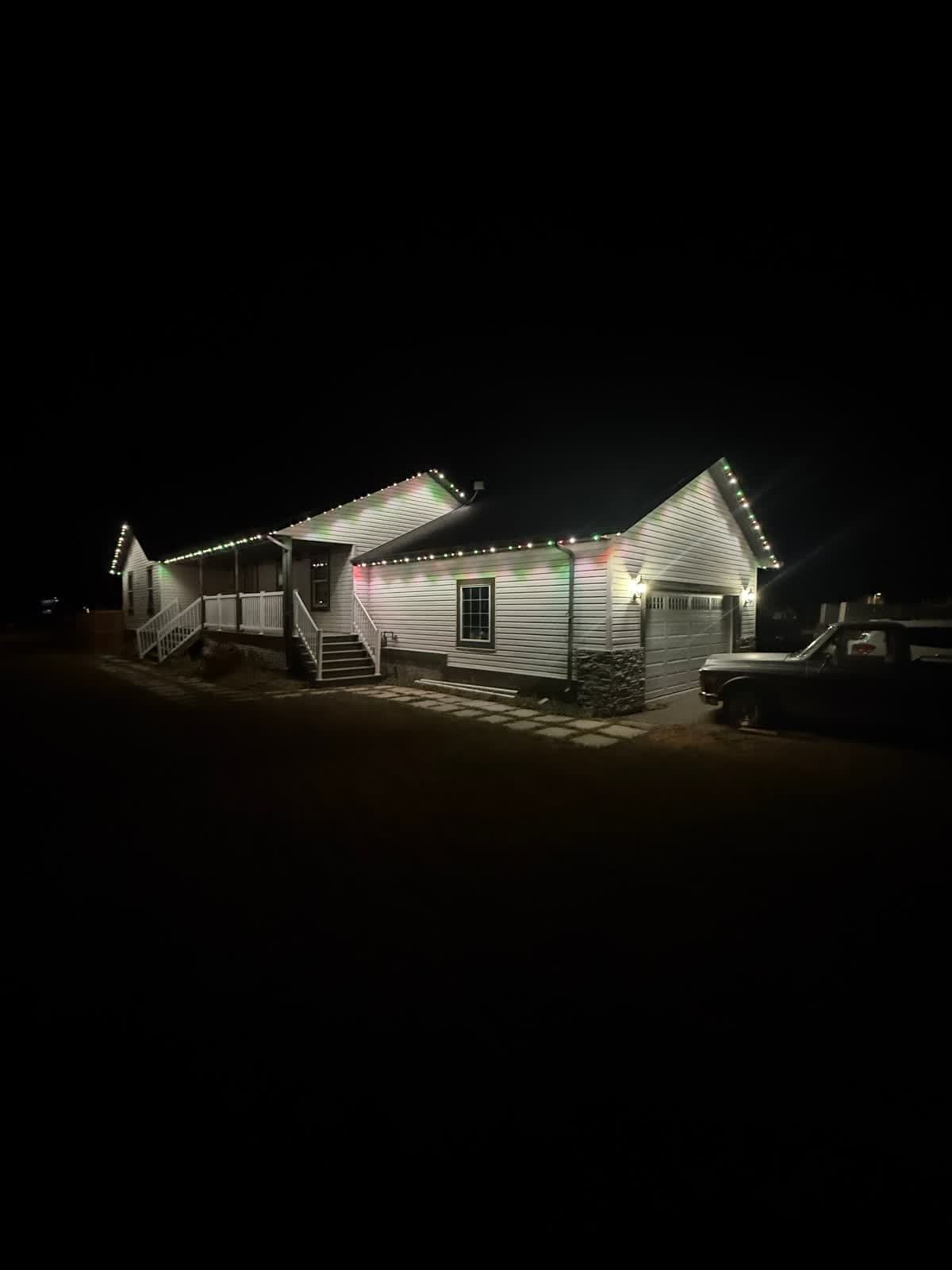 From our gallery
If you are looking at your roofline and wondering how to light it properly, you are in the right place. Soffit lighting is one of the most effective ways to add curb appeal, security, and year-round value to your home's exterior.
This guide covers everything from what soffit lighting is, to how it is installed, to the different types available, and why permanent LED soffit systems are replacing traditional recessed fixtures on homes across Canada.
What is soffit lighting?
The soffit is the underside of the roof overhang, the horizontal surface between the fascia board and the exterior wall of your home. Soffit lighting refers to any light fixture or system installed into or along this surface to illuminate the area below.
Soffit lights point downward, washing the side of the house and the ground beneath with light. This is what makes them effective for both aesthetics and security. Unlike eave-line or fascia lighting that projects outward, soffit lighting creates a controlled downward wash that highlights architectural features without glare.
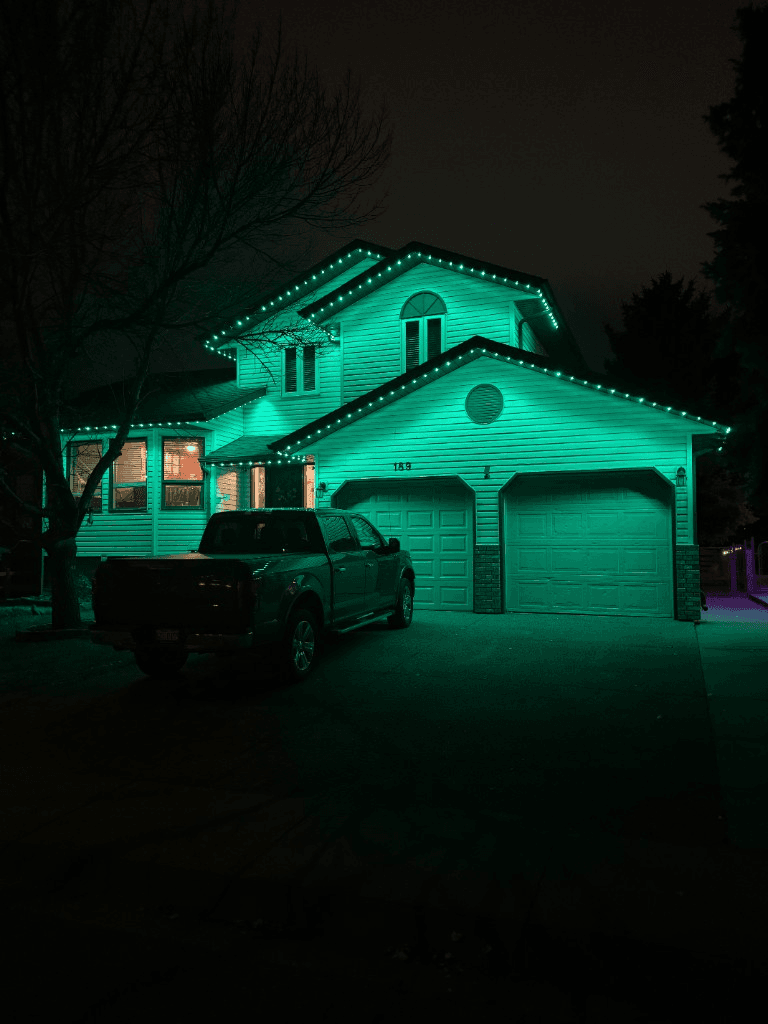
Why install soffit lighting?
Soffit lighting does more than most homeowners expect:
- Curb appeal. A well-lit roofline makes a home look finished and intentional. Warm white soffit lighting running every evening is one of the highest-impact exterior upgrades you can make.
- Security. Bright perimeter lighting is one of the most effective deterrents against break-ins. Soffit lights eliminate dark zones along the foundation and entry points. See our full security lighting guide for design ideas.
- Home value. Real estate agents consistently note that exterior lighting is one of the first things buyers notice. Permanent soffit lighting is increasingly viewed as a move-in-ready feature.
- Year-round versatility. With a permanent LED system, soffit lights are not limited to one look. Change colours for holidays, game day, or any occasion from the app.
- Safety. Illuminated walkways and entries reduce trip-and-fall risk for guests, deliveries, and family members.
365
Days of use per year with permanent soffit lights
50,000+
Rated LED lifespan hours
16M+
Colours available with RGBW systems
Types of soffit lights
There are several approaches to soffit lighting, each with trade-offs:
Traditional recessed pot lights
The most common DIY approach. A circular fixture is recessed into a hole cut in the soffit panel. Typically line-voltage (120V), these use standard E26 bulbs or integrated LED modules.
Pros: widely available, familiar to electricians, many style options Cons: each fixture requires a separate hole and wiring run, limited to one colour temperature, no app control, exposed to moisture if not properly rated
Canless recessed lights
A newer version of the recessed approach that eliminates the metal housing (the "can"). Canless fixtures are thinner, lighter, and easier to retrofit into tight soffits.
Pros: slimmer profile, easier install in shallow soffits, often IC-rated Cons: still one fixture per hole, still single colour, still line voltage, still no smart control unless paired with a separate hub
LED strip lights
Flexible LED strips adhered inside a channel or directly to the soffit surface. Available in single-colour or RGB.
Pros: continuous light line, lower cost per foot, easy to DIY Cons: adhesive fails in cold weather, exposed strips look cheap, poor UV resistance, short lifespan outdoors, difficult to repair individual sections
Permanent LED track systems
A professional-grade system where individually addressable LED puck modules sit inside a colour-matched aluminum hat track mounted along the soffit or fascia. Controlled by a mobile app with 16 million+ colours, scheduling, zones, and animations.
Pros: one install lasts 10 to 15 years, every node is individually addressable, IP68 weather rated, 24V low voltage, app controlled, year-round use for any occasion, certified control hardware, track actually protects the soffit Cons: higher upfront cost than DIY options, requires professional installation
This is what Number One Lights installs. For a full breakdown of the hardware, see The System.
| Feature | Many Competitors | GOULY Gen 3 |
|---|---|---|
| Factor | Recessed pot lights | ✓LED strips | Permanent LED track |
| Voltage | 120V line voltage | ✓12V or 24V | 24V low voltage |
| Colour options | One fixed colour temperature | ✓Single colour or basic RGB | 16 million+ RGBW colours |
| App control | No (unless adding smart bulbs) | ✓Basic with aftermarket controller | Full app with scheduling, zones, music sync |
| Weather rating | Damp or wet rated (varies) | ✓Not rated for outdoor use | IP68 dust and waterproof |
| Lifespan | 15,000 to 25,000 hours | ✓10,000 to 20,000 hours | 50,000+ hours |
| Installation | One hole per fixture, 120V wiring | ✓Adhesive or channel mount | Professional one-time track install |
| Serviceability | Replace entire fixture | ✓Replace entire strip section | Swap individual LED module |
| Year-round versatility | White only | ✓Limited | Unlimited colours and occasions |
How to choose the right soffit lights
Before buying anything, consider these factors:
Soffit material
Your soffit material affects what you can install and how:
- Aluminum soffit. The most common in newer Calgary homes. Thin gauge requires careful cutting for recessed fixtures. Permanent track systems mount to the fascia edge without penetrating the soffit panel.
- Vinyl soffit. Flexible and can deform from heat. Avoid high-wattage recessed fixtures. LED options are safer because they produce minimal heat.
- Wood soffit. Found on older homes and custom builds. Easy to cut and mount into, but moisture protection is critical. Sealed LED systems protect wood better than open recessed fixtures.
- Fibre cement (Hardie Board). Durable but difficult to cut cleanly. Professional tools recommended.
Wet rating vs damp rating
This is critical for outdoor soffit lighting and one of the most common mistakes in DIY installs.
- Wet rated means the fixture is approved for direct exposure to rain, snow, and moisture. Required for open soffits or any location where water can reach the fixture.
- Damp rated means the fixture handles humidity and condensation but not direct water contact. Only suitable for fully enclosed, covered soffits with no moisture exposure.
If you are unsure, choose wet rated. In Alberta, Chinook freeze-thaw cycles push moisture into places you would not expect. A permanent LED system rated IP68 handles full immersion, which is well beyond what any soffit encounters.
Colour temperature
Colour temperature is measured in Kelvin (K) and determines the feel of the light:
- 2700K (warm white): cozy, residential feel, similar to incandescent. The most popular choice for everyday soffit lighting.
- 3000K (soft white): slightly brighter and crisper while still warm. Good for modern homes.
- 4000K (neutral white): clean and bright. Better for security applications or commercial properties.
- 5000K+ (daylight): harsh for residential use. Avoid for soffits unless used exclusively for security.
With an RGBW permanent system, you do not have to choose. The dedicated warm white diode produces true warm tones for daily use, and you can switch to any colour or temperature from the app whenever you want.
Soffit lighting spacing and layout
Proper spacing prevents dark spots and hot spots. Here are the general guidelines:
The half-height rule
A common rule of thumb: space soffit lights at roughly half the mounting height. If your soffit is 10 feet above the ground, space lights about 5 feet apart.
Typical spacing ranges
- Accent and ambience: 6 to 8 feet apart
- General illumination: 4 to 6 feet apart
- Security lighting: 3 to 4 feet apart for full perimeter coverage
Permanent LED node spacing
Permanent track systems like GOULY Gen 3 use nodes spaced at consistent intervals inside the track, typically 2 to 4 inches apart. This creates a continuous line of light with no dark gaps, something impossible to achieve with individual recessed fixtures without drilling dozens of holes.
Layout tips
- Start at corners and work inward for even distribution
- Light both sides of the garage door for balanced appearance
- Do not skip the sides of the house visible from the street
- Consider quad-zone control to run different brightnesses on front vs back
How to install recessed soffit lights (DIY)
If you are going the traditional recessed route, here is the general process. This is for informational purposes. If you are not comfortable with electrical work, hire a licensed electrician.
Tools and materials
- Recessed light fixtures (wet rated for outdoor use)
- 14/2 or 12/2 NM-B cable (check local code)
- Wire connectors, junction boxes
- Hole saw matching fixture diameter (typically 4 inch or 6 inch)
- Drill, wire strippers, fish tape
- Circuit tester or multimeter
- Safety glasses and ladder
Step by step
- Plan your layout. Mark fixture locations on the soffit using the spacing guidelines above. Use a stud finder to avoid joists and blocking.
- Turn off the power. Kill the breaker for the circuit you are working on. Verify with a circuit tester. No exceptions.
- Run the cable. Fish NM cable from the power source through the soffit cavity to each fixture location. Daisy-chain from one fixture to the next.
- Cut the holes. Use the hole saw to cut openings at each marked location. Cut from below, go slow, and support the soffit panel to prevent cracking.
- Wire each fixture. Connect hot to hot, neutral to neutral, ground to ground. Follow the manufacturer's wiring diagram. Use wire connectors rated for outdoor use.
- Install the fixtures. Push the fixture into the hole and engage the spring clips or mounting hardware. Ensure the trim sits flush against the soffit.
- Test. Turn the breaker back on and verify each fixture lights up. Check for flickering, which may indicate a loose connection.
- Seal. Apply outdoor-rated caulk around each fixture if required by the manufacturer or local code.
Common mistakes to avoid
- Using damp-rated fixtures where wet-rated is required
- Cutting holes too close to joists, leaving no room for mounting clips
- Running cable through soffit vents or perforated panels
- Not sealing cable penetrations, letting moisture into the soffit cavity
- Overloading a single circuit with too many fixtures
Why permanent LED soffit lighting is replacing traditional fixtures
Traditional recessed soffit lights have worked for decades. But they have real limitations that permanent LED track systems solve:
One install, zero maintenance
Recessed fixtures need bulb replacements, seal checks, and occasional full fixture swaps. A permanent LED system rated for 50,000+ hours runs for over a decade with no maintenance. If a single node does fail, the singular module design means you swap one puck, not the whole system.
Every colour, every occasion
Recessed cans give you one colour temperature forever. With a permanent RGBW system, your soffit lighting becomes:
- Christmas lights in December
- Canada Day red and white in July
- Halloween orange and purple in October
- Security bright white when you are away
- Warm white architectural glow every other night
Browse 1,000+ patterns or see the full animation library for what is possible.
No holes in your soffit
Recessed fixtures require cutting holes in the soffit panel. Each hole is a potential moisture entry point, especially in Alberta's freeze-thaw climate. Permanent track systems mount along the fascia edge with the aluminum channel actually protecting the soffit surface rather than penetrating it.
App control from anywhere
No more walking outside to flip a switch or setting a basic timer. The GOULY app lets you control your soffit lighting from your phone, anywhere in the world. Set schedules, adjust brightness, change zones, sync to music, or share patterns with the GOULY community.
How much does soffit lighting cost?
Traditional recessed (DIY)
- Fixtures: $10 to $50 per light (wet-rated LED canless)
- Wiring and materials: $50 to $150 total
- Typical home (8 to 12 fixtures): $150 to $750 in materials
- Electrician install: $80 to $200 per fixture if hiring a pro
- Total with pro install: $800 to $2,500+
Permanent LED track system
- Typical Calgary bungalow (150 ft): $2,500 to $3,000
- Two storey (150 to 200 ft): $3,000 to $4,000
- Large home (200 to 300 ft): $4,000 to $5,000
The permanent system costs more upfront but includes professional installation, certified control hardware, app setup, warranty, and year-round functionality. No ongoing costs, no bulb replacements, no annual maintenance. The break-even vs traditional approaches is typically around 4 years.
Soffit lighting ideas for every season
One of the biggest advantages of permanent soffit lighting is that it changes with you:
| Season | Soffit lighting idea |
|---|---|
| Winter | Christmas colours, warm white holiday glow, chase animations |
| Spring | Easter pastels, fresh greens, soft whites |
| Summer | Canada Day red and white, warm white patio ambience |
| Fall | Halloween orange and purple, amber harvest tones |
| Year-round | Architectural warm white, security bright white, team colours |
See real soffit lighting installs in the gallery or read what homeowners say on our testimonials page.
Soffit lighting vs eave lighting vs fascia lighting
These terms get confused often. Here is the difference:
- Soffit lighting mounts on the underside of the overhang, pointing downward. Best for wall-washing and illuminating the ground below.
- Eave lighting mounts at the eave line where the roof meets the fascia. This is where most permanent LED systems sit. The light projects outward and downward.
- Fascia lighting mounts on the vertical fascia board. Light projects outward from the face of the house.
In practice, permanent LED track systems installed at the eave line serve all three purposes. The hat track channel mounts at the junction of fascia and soffit, directing light both outward and downward for full coverage.
Soffit lighting maintenance
Traditional recessed
- Check seals and gaskets annually before winter
- Replace failed bulbs (even LEDs dim over time)
- Clear debris from recessed housings
- Inspect for moisture intrusion after heavy storms
Permanent LED track
- Occasional rinse with a garden hose (the IP68 rating handles it)
- No bulb changes, no seal checks, no housing inspections
- If a node fails, a technician swaps the individual LED module in minutes
The bottom line on soffit lighting
Soffit lighting is one of the smartest exterior upgrades a homeowner can make. It adds curb appeal, security, and home value while making your property safer and more inviting.
If you want a single-purpose downlight, traditional recessed fixtures work. But if you want a system that does soffit lighting, holiday lighting, security lighting, and architectural lighting all in one, with app control, 16 million colours, and zero annual maintenance, a permanent LED system is the modern answer.
Explore outdoor lighting ideas for more inspiration, or check the FAQ for common questions.
Ready to light up your soffit the right way?
Frequently asked questions
Soffit lighting is any light fixture or system installed on the underside of your roof overhang (the soffit). It points downward to illuminate the side of your home and the ground below, providing curb appeal, security, and architectural accent lighting.
A common guideline is the half-height rule: space lights at roughly half the mounting height. For a 10-foot soffit, that is about 5 feet apart. For security, go tighter at 3 to 4 feet. Permanent LED track systems use nodes spaced 2 to 4 inches apart for a continuous line with no gaps.
Yes for most outdoor applications. Wet-rated fixtures are approved for direct rain and snow exposure. Damp-rated is only suitable for fully enclosed soffits with zero moisture contact. In Alberta's freeze-thaw climate, wet rated or IP68 is strongly recommended.
2700K to 3000K (warm white) is the most popular for residential soffit lighting. It creates a cozy, inviting glow. 4000K works for security-focused applications. With an RGBW permanent system, you can switch between any colour temperature from the app.
DIY recessed fixtures cost $150 to $750 in materials for a typical home. Professional recessed installation runs $800 to $2,500 or more. A permanent LED track system costs $2,500 to $5,000 depending on home size, but includes year-round app control, 16 million colours, and zero ongoing maintenance costs.
Traditional recessed soffit lights are a DIY option if you are comfortable with electrical work. However, cutting into soffits creates moisture entry points, and 120V wiring requires careful handling. Permanent LED track systems are professionally installed with low-voltage 24V wiring and do not penetrate the soffit panel.
Soffit lighting mounts on the underside of the overhang pointing downward. Eave lighting mounts at the eave line where the roof meets the fascia. Permanent LED track systems installed at the eave line serve both purposes, directing light outward and downward for full coverage.
Yes. Bright perimeter soffit lighting eliminates dark zones along the foundation and entry points. Permanent LED systems can run security bright white on a schedule or be switched on from anywhere using the mobile app.
Questions before you book?
Visit our FAQ page
Get quick answers on Gen 3 Lighting, pricing, install timelines, app setup, warranty, and what to expect on install day.